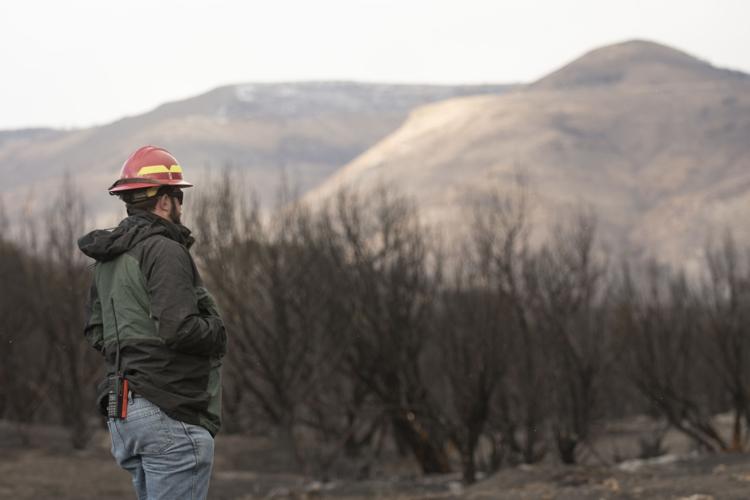

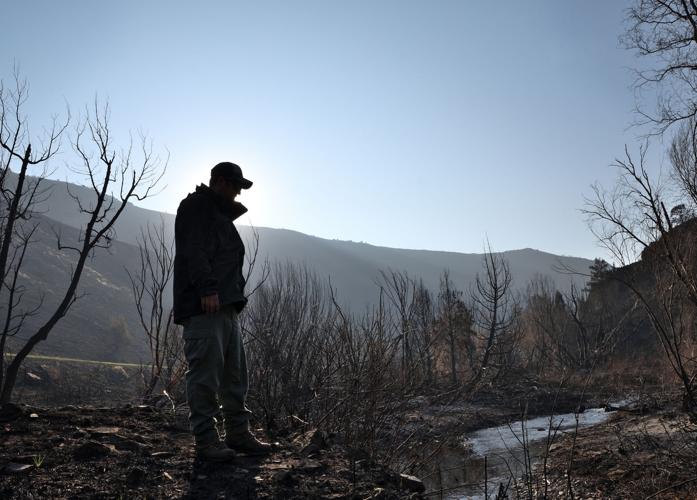

Scott Soletti, U.S. Forest Service district wildlife biologist, watches restoration efforts underway Nov. 10 in the South Hills near Oakley. The Badger Fire has dramatically changed the land, but those changes aren't all bad. 'Fire is going to regenerate (upper elevation) plant communities,' Soletti says. 'It’s part of that natural ecological succession.'

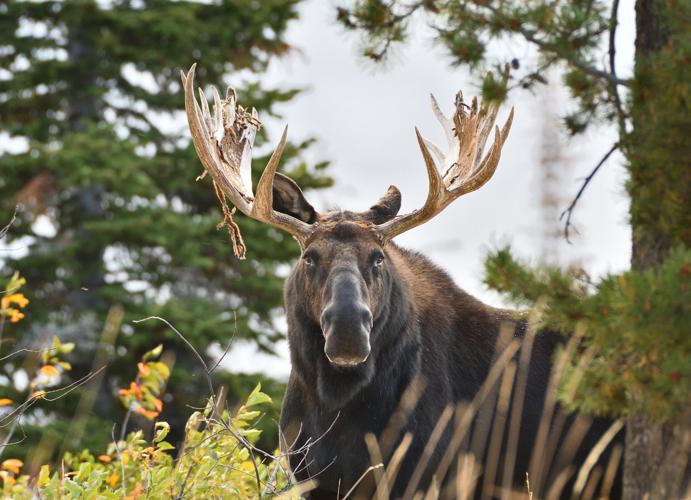
A South Hills bull moose roams around a prescribed burn area in September. Moose could experience a short-term shortage of food due to the Badger Fire, but in the long term the blaze could be beneficial for the aspen and willows the animals eat.

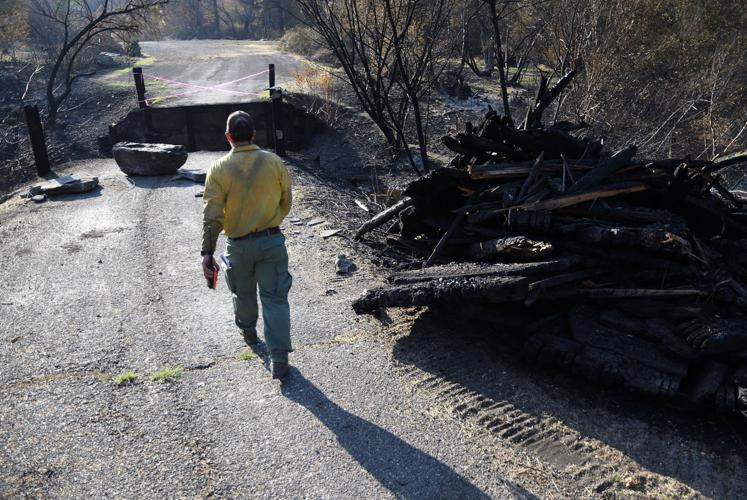
Scott Soletti walks past the wood remnants of the bridge at the Harrington Fork picnic area.
PHOTOS: Recovering from the Badger Fire
Restoration continues after South Hills Badger Fire

U.S. Forest Service District Wildlife Biologist Scott Soletti talks about restoration efforts Nov. 10, 2020, while a tree masticator works in the background. Land management agencies are trying to rehab the South Hills to help the land bounce back from the Badger Fire.
Restoration continues after South Hills Badger Fire

From right, Scott Soletti, U.S. Forest Service district wildlife biologist, goes over plans with fuels technicians Aaron Melville and Amber Blanchard on Nov. 10 in the South Hills near Oakley. The effects of the Badger Fire aren't all negative. 'The things that make the South Hills such a cool place are still going to be there,' Soletti says.
Restoration continues after South Hills Badger Fire

U.S. Forest Service District Wildlife Biologist Scott Soletti lets a handful of soil fall through his fingers Nov. 10 at a rehab site in the South Hills. At Trapper Creek, the Forest Service has aerial seeded bluegrass, antelope bitterbrush and mountain big sagebrush, among other species.
Restoration continues after South Hills Badger Fire

A tree masticator mulches a juniper tree Nov. 10 in the South Hills near Oakley. Up to six machines will be chewing up and grinding down about 1,000 acres of burned up juniper trees in the Trapper Creek area.
Restoration continues after South Hills Badger Fire

The Trapper Creek area mastication project is one of several land management efforts that could help South Hills plants come back from the Badger Fire strong. The Bureau of Land Management and Forest Service have already flown thousands of acres of native grass and forb seed onto the burn area.
Restoration continues after South Hills Badger Fire

A tree masticator mulches a juniper tree Nov. 10 in the South Hills near Oakley. Up to six machines will be chewing up and grinding down about 1,000 acres of burned up juniper trees in the Trapper Creek area.
Restoration continues after South Hills Badger Fire

Scott Soletti, U.S. Forest Service district wildlife biologist, talks with fuels technicians Nov. 10 in the Trapper Creek area near Oakley. Grinding dead juniper trees into wood chips comes with a few restoration benefits. For one, the woody slash covers the ground, minimizing post-fire erosion. Driving excavators over the ground also forces newly applied seed into the soil, improving germination rates.
Rising from the ashes
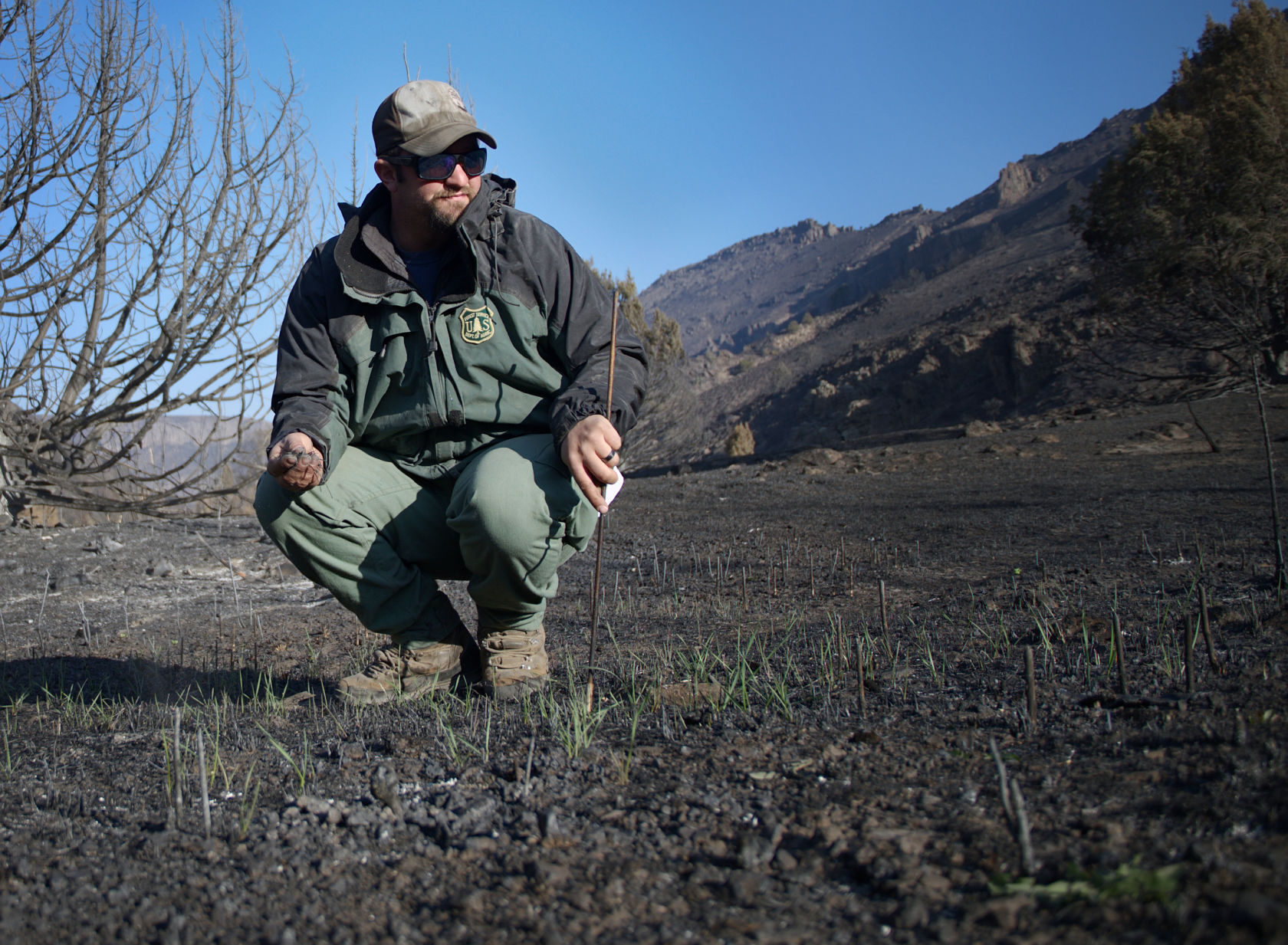
U.S. Forest Service District Wildlife Biologist Scott Soletti inspects fresh blades of sedge Oct. 9 along Rock Creek in the South Hills. Plants began sprouting just weeks after the fire swept through.
Restoration continues after South Hills Badger Fire
Scott Soletti, U.S. Forest Service district wildlife biologist, watches restoration efforts underway Nov. 10 in the South Hills near Oakley. The Badger Fire has dramatically changed the land, but those changes aren't all bad. 'Fire is going to regenerate (upper elevation) plant communities,' Soletti says. 'It’s part of that natural ecological succession.'
Restoration continues after South Hills Badger Fire

A forlorn juniper snag waits to be turned into mulch Nov. 10 in the South Hills near Oakley. It will take a few years to gauge the success of the Badger Fire reseeding efforts, BLM Burley Field Manager Ken Crane says.
Rising from the ashes
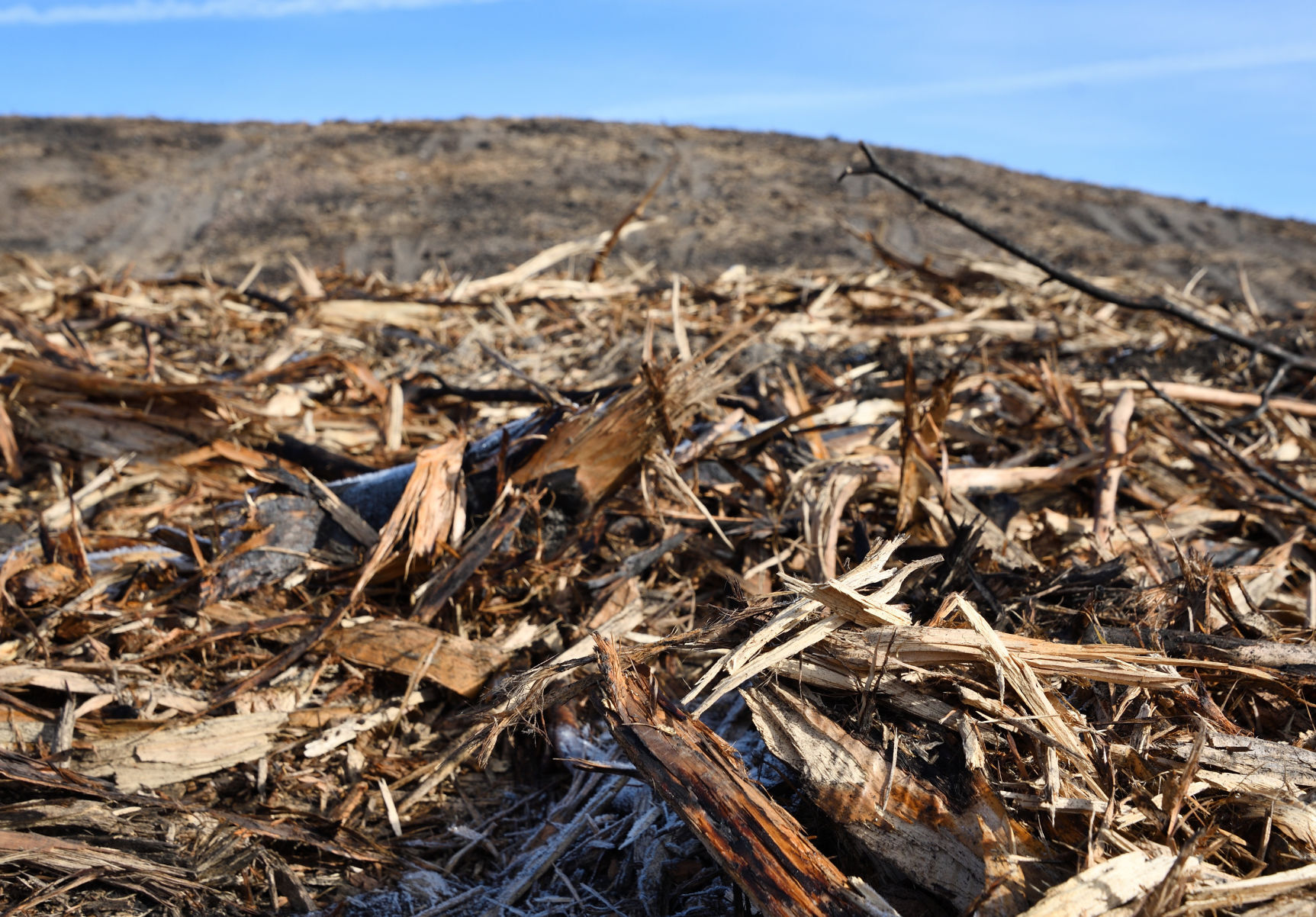
Juniper splinters cover hundreds of acres of land Nov. 22 in the Trapper Creek area of the South Hills.
Restoration continues after South Hills Badger Fire

A tree masticator reduces a juniper snag to a pile of splinters Nov. 10 in the Trapper Creek area of the South Hills. Each machine averages four to eight acres of snags per day.
Restoration continues after South Hills Badger Fire
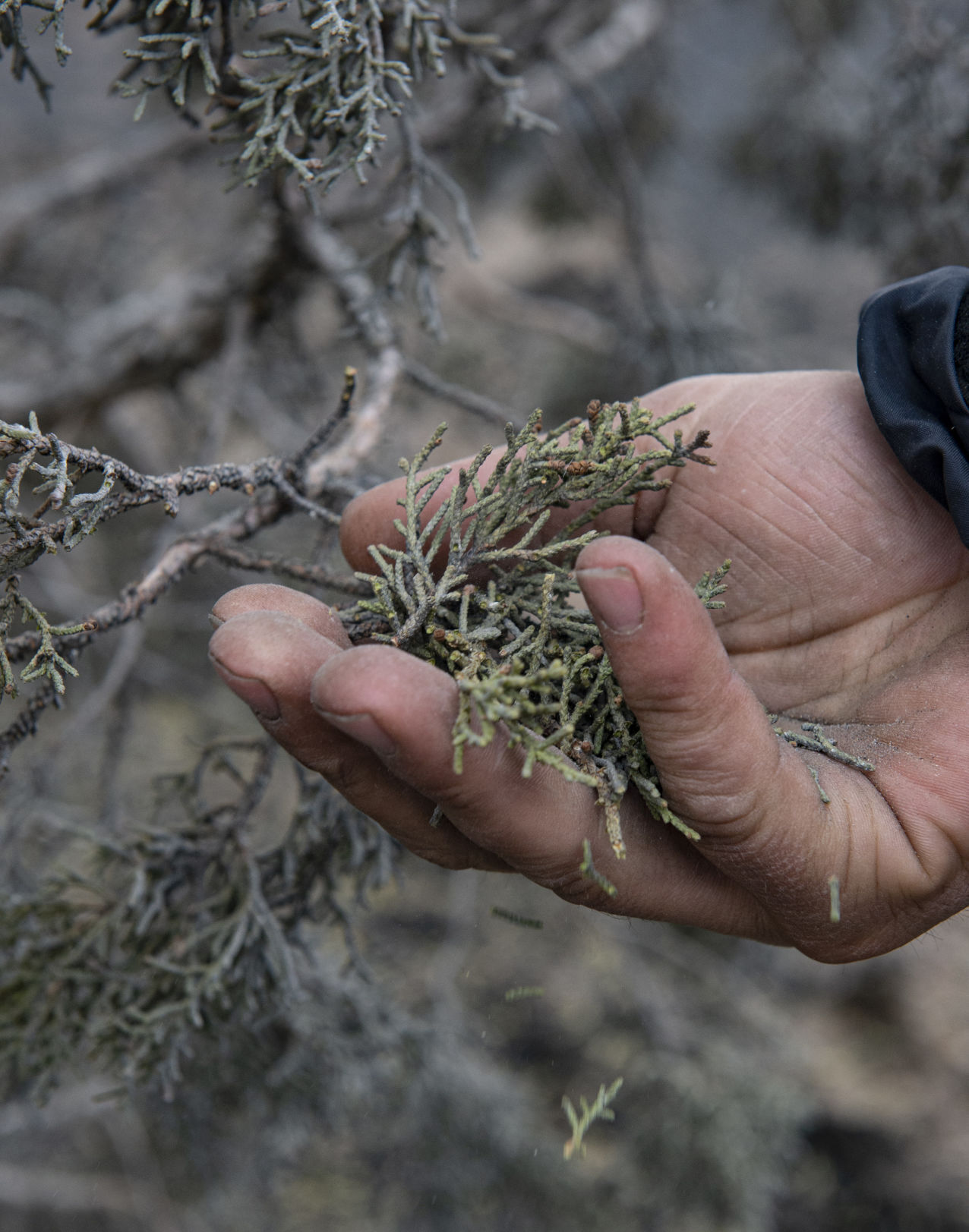
Crunchy juniper needles fall to the ground Nov. 10 in the South Hills near Oakley.
Restoration continues after South Hills Badger Fire

A tree masticator mulches dead juniper trees Tuesday, Nov. 10, 2020, in the South Hills near Oakley. Up to six machines will be chewing up and grinding down about 1,000 acres of burned up trees in the area.
Restoration continues after South Hills Badger Fire

A tree masticator goes about its business Tuesday, Nov. 10, 2020, in the Sawtooth National Forest in Cassia County south of Oakley. Up to six machines will be chewing up and grinding down as much as 1,000 acres of burned up trees in the area.
Restoration continues after South Hills Badger Fire

Squaw Creek runs through the Badger Fire burn area Nov. 10 in the Trapper Creek area of the South Hills. The Forest Service is trying to minimize post-fire erosion, in part to prevent sediment from running off into creeks and degrading water quality.
Rising from the ashes

Blades of sedge sprout from the blackened ground Oct. 9 in the South Hills.
PHOTOS: Ranchers deal with fallout from Badger Fire
Ranchers deal with fallout from Badger Fire

Rancher Broden Matthews runs the chute while having his cows spayed Wednesday, Dec. 23, 2020, on his ranch near Oakley.
Ranchers deal with fallout from Badger Fire

Stran Matthews, 8, helps out where he can while cows are spayed Wednesday, Dec. 23, 2020, on his family's ranch near Oakley.
Ranchers deal with fallout from Badger Fire

Rancher Broden Matthews talks ranching while running the chute and having his cows spayed Wednesday, Dec. 23, 2020, on his ranch near Oakley.
Ranchers deal with fallout from Badger Fire

Cows are spayed at Theee Bar Cattle Ranch on Wednesday, Dec. 23, 2020, near Oakley.
Ranchers deal with fallout from Badger Fire

Cows meander around Wednesday, Dec. 23, 2020, at the Theee Bar Cattle Ranch near Oakley.
Ranchers deal with fallout from Badger Fire

Cattle graze and lounge around Wednesday, Dec. 23, 2020, near Theee Cattle Ranch near Oakley.
Ranchers deal with fallout from Badger Fire

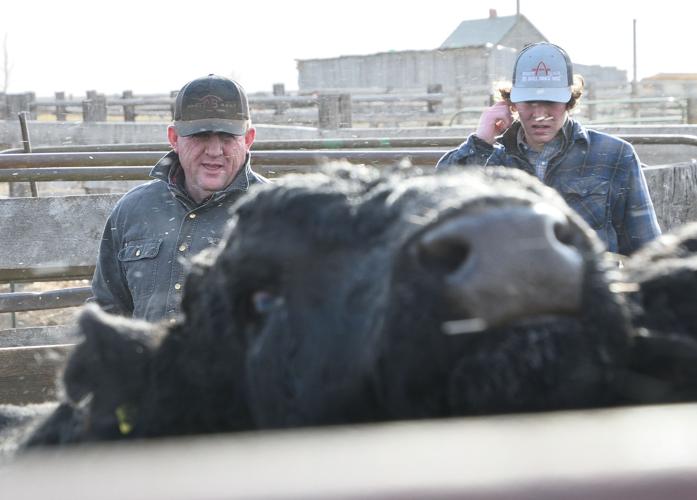
Rancher Broden Matthews talks ranching while running the chute and having his cows spayed Dec. 23 on his ranch near Oakley. The Matthewses lost 66 cattle because of Badger Fire.
Ranchers deal with fallout from Badger Fire
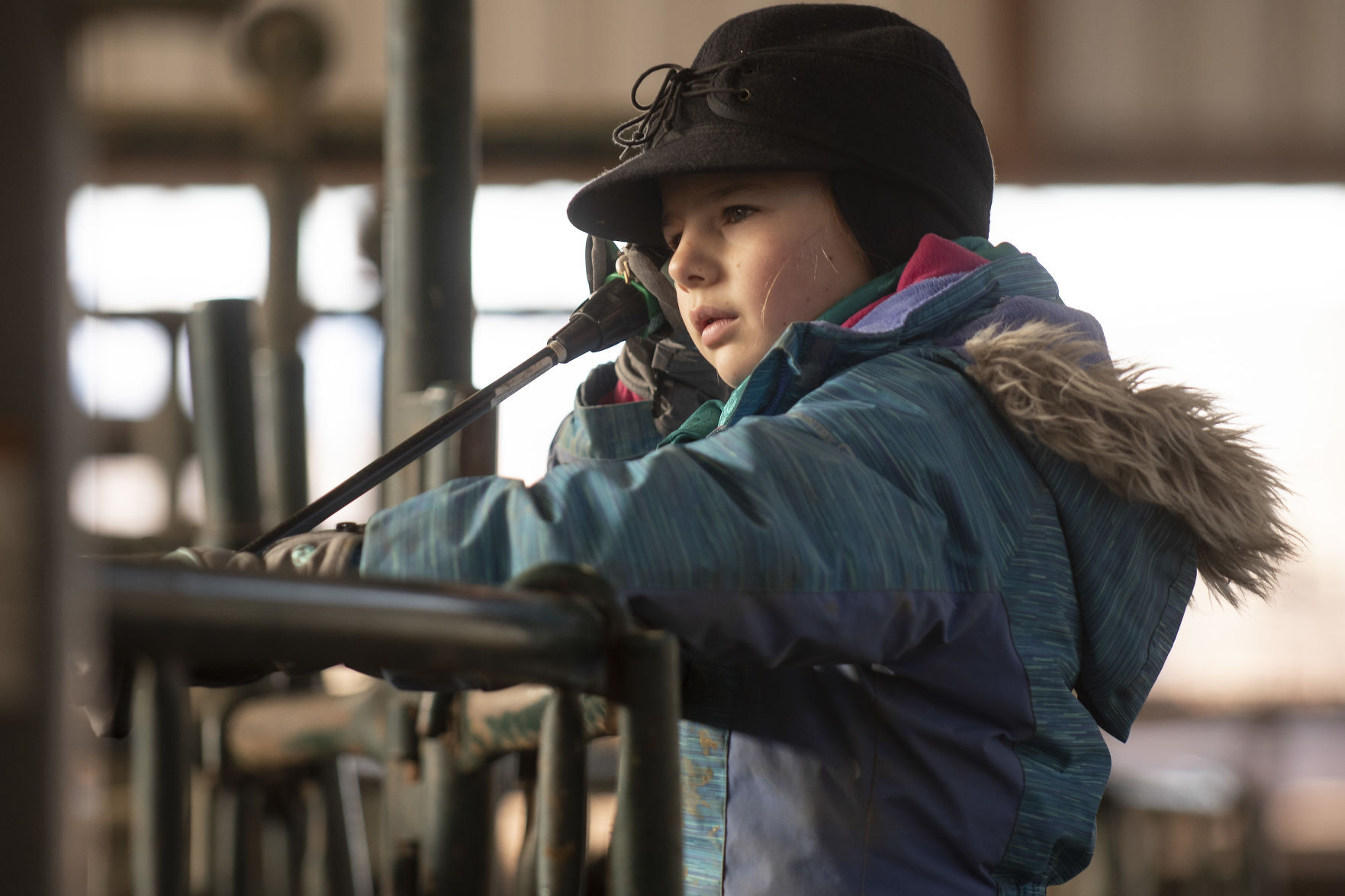
Kinslee Matthews, 12, moves cows down the chute while to be spayed Wednesday, Dec. 23, 2020, on the family ranch near Oakley.
Ranchers deal with fallout from Badger Fire

Cows meander around Wednesday, Dec. 23, 2020, at the Theee Bar Cattle Ranch near Oakley.
Ranchers deal with fallout from Badger Fire

Doug Pickett (left) and his son Strom sort bulls Dec. 22 at their ranch near Oakley.
Ranchers deal with fallout from Badger Fire

Doug Pickett (left) and his son Strom sort bulls Dec. 22 at their ranch near Oakley.
Ranchers deal with fallout from Badger Fire

Doug Pickett (left) and his son Strom sort bulls Dec. 22 at their ranch near Oakley.
Ranchers deal with fallout from Badger Fire

Doug Pickett (left) and his son Strom sort bulls Dec. 22 during a snow flurry at their ranch near Oakley.
Ranchers deal with fallout from Badger Fire

Doug Pickett (left) and his son Porter sort bulls Dec. 22 during a snow flurry at their ranch near Oakley.
Ranchers deal with fallout from Badger Fire

Porter Pickett (left) and his dad Doug sort bulls Dec. 22 on a cold day near Oakley.
Ranchers deal with fallout from Badger Fire

Rancher Doug Pickett points out where the Badger Fire began Dec. 22 at his ranch near Oakley.
Ranchers deal with fallout from Badger Fire
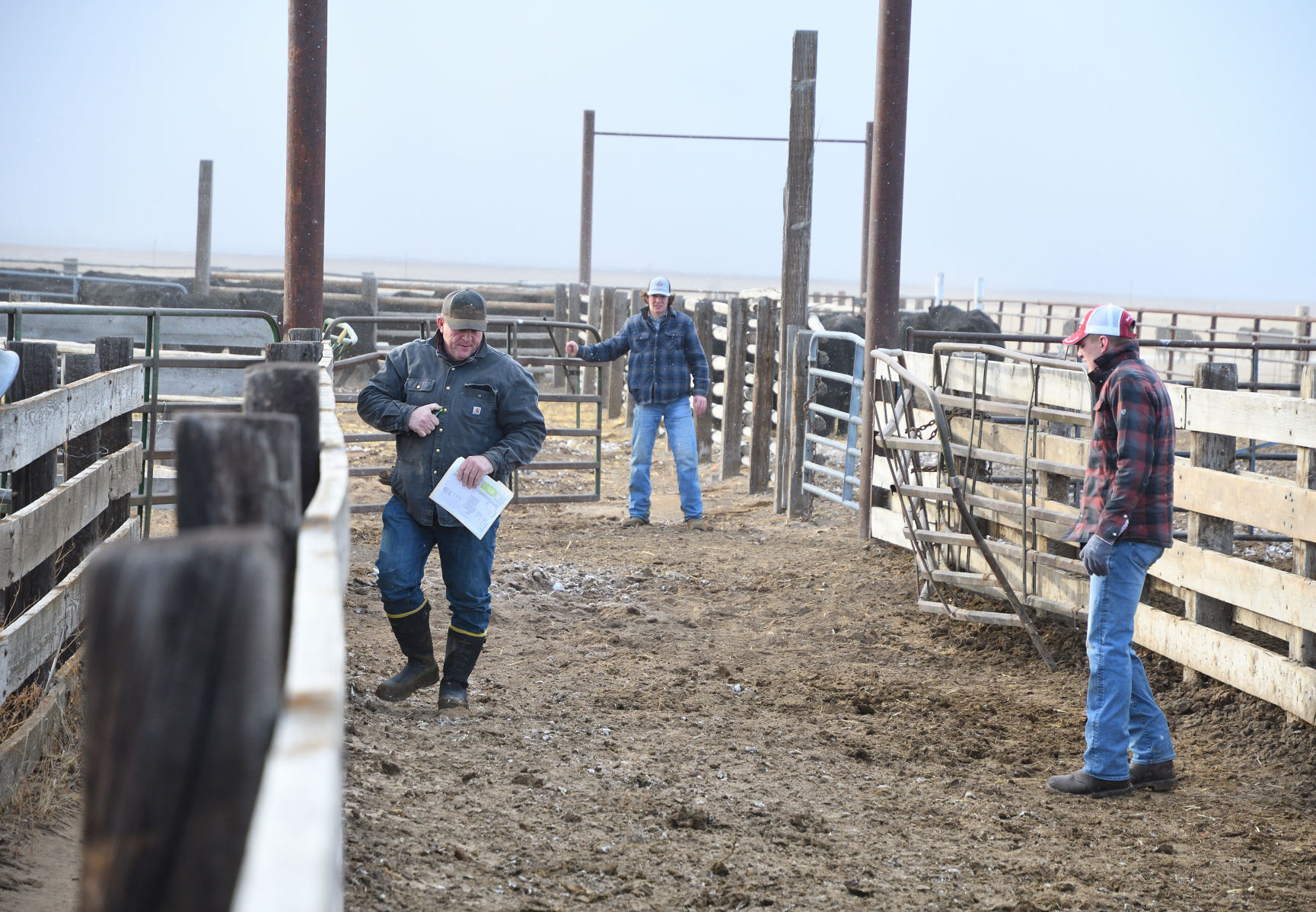
Doug Pickett sorts bulls Dec. 22 with his sons Strom (left) and Porter at his family's ranch near Oakley.
Ranchers deal with fallout from Badger Fire

Cattle stand in a pen Dec. 22 at the Picketts' ranch near Oakley.
The fire problem
The fire problem

A firefighter with the Idaho City Hotshots looks for spot fires during a back burn along the Pine-Featherville Road in 2013 while battling the more than 90,000-acre Elk Fire Complex.
The fire problem
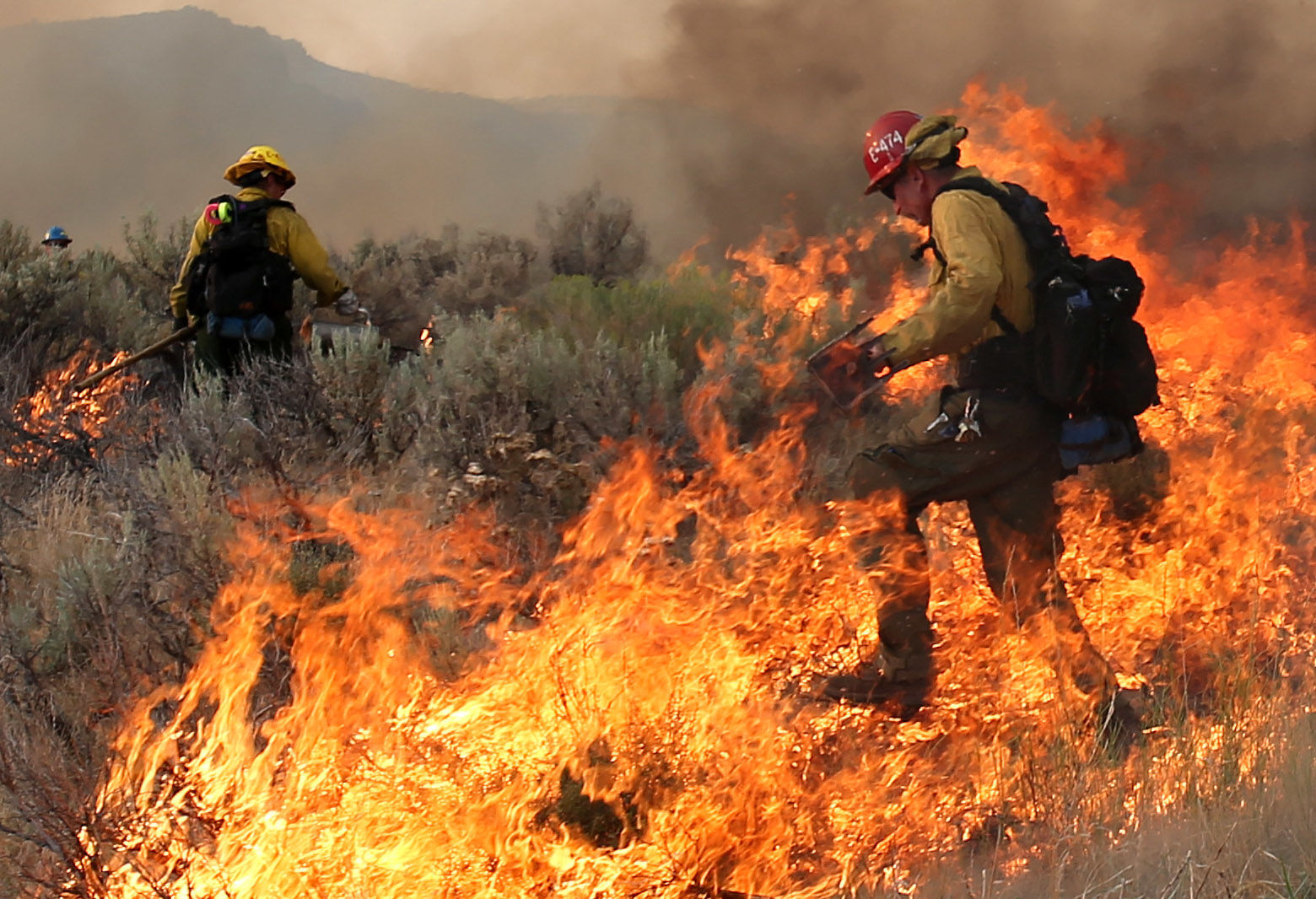
Tom Giesemann, a firefighter with the U.S. Forest Service, jumps through a back burn at the Fir Grove Fire in 2013 north of Gooding.
The fire problem

Tyler Kennedy, of the Idaho City Hotshots, monitors a back burn in 2013 at the 111,000-acre Elk Fire Complex that burned more than 50 structures northwest of Fairfield. Climate change, long-term fire suppression and invasive species are making wildfires increasingly common in the West.
The fire problem

Chris Anthony, with the U.S. Bureau of Land Management, starts a back burn in 2013 on the 2,000-acre Bray Lake Fire north of Bliss.
The fire problem
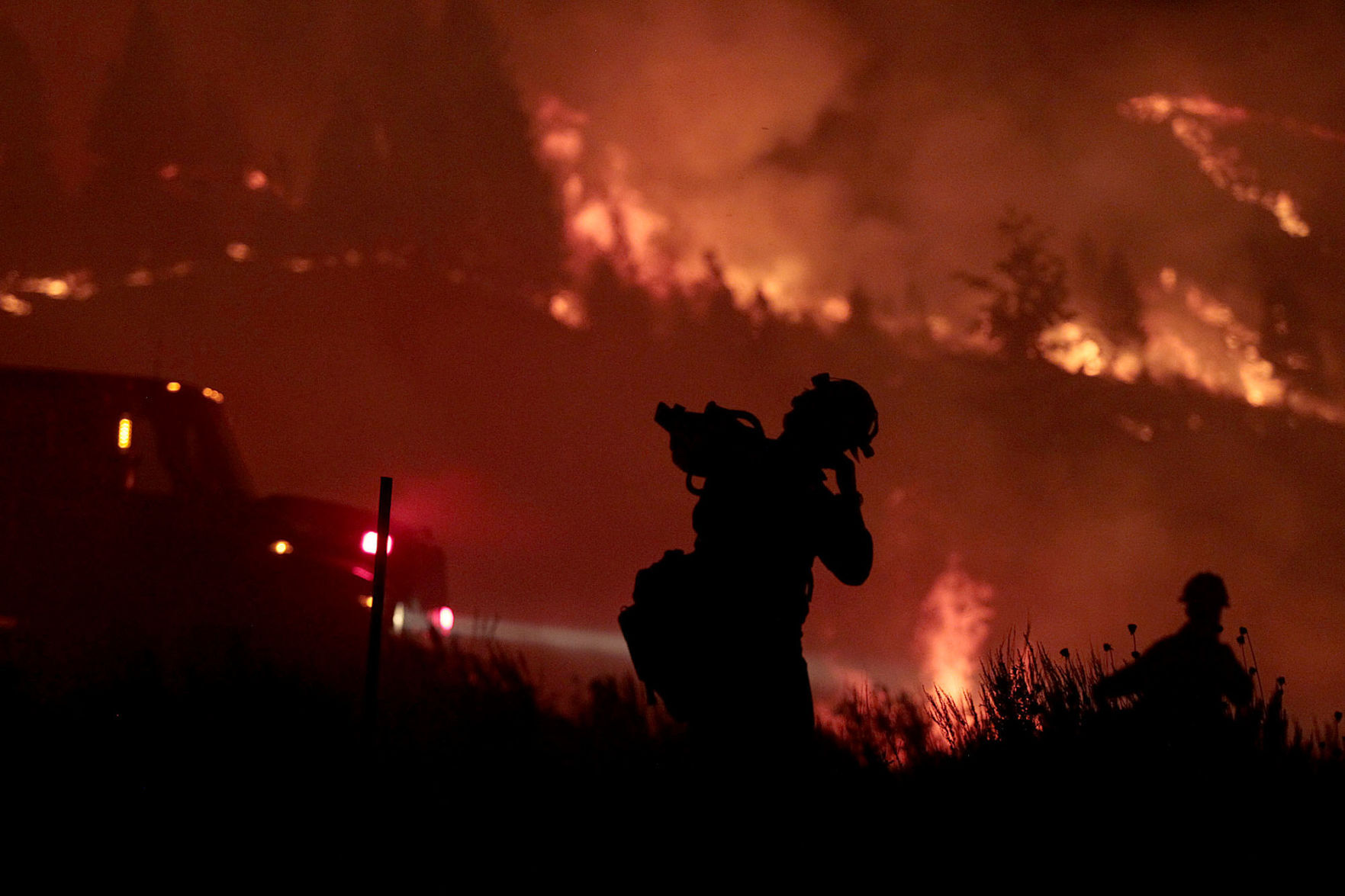
Members of the Idaho City Hotshots start a back burn in 2013 while battling the 111,000-acre Elk Fire Complex that burned more than 50 structures northwest of Fairfield.
The fire problem

Bert Brackett pauses on July 24, 2007, while describing how the Murphy Complex Fire trapped and killed several of his cattle about 40 miles west of Rogerson.
The fire problem
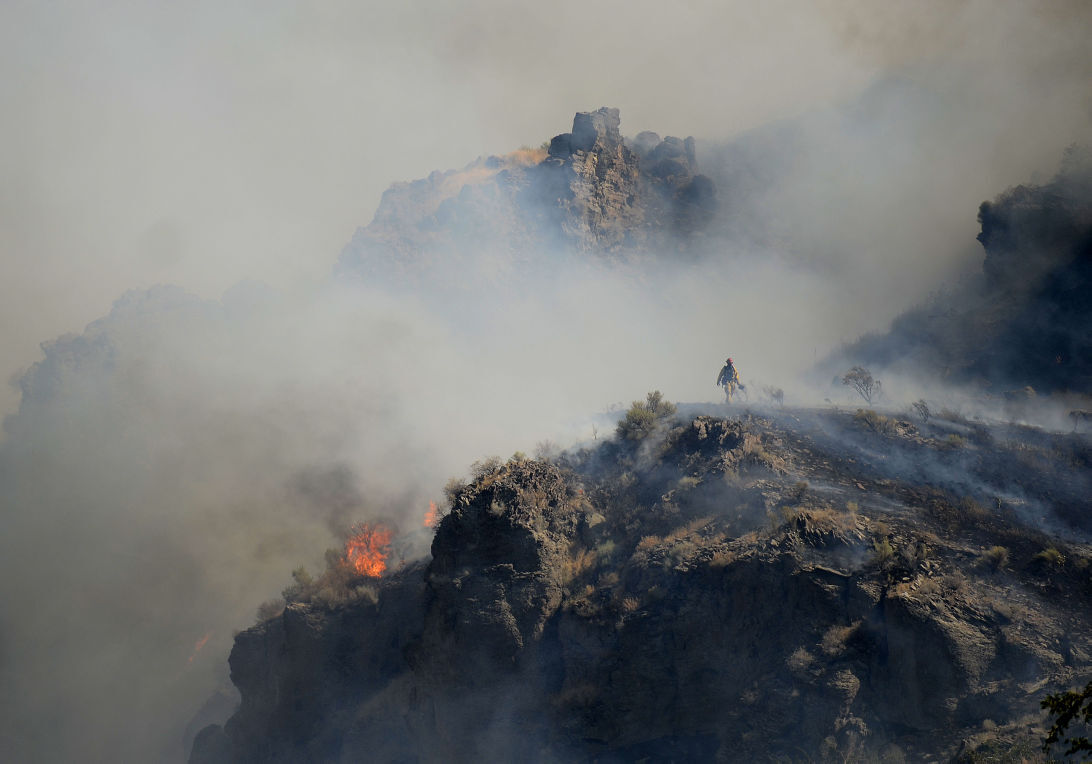
Jerome Rural Fire District and the Bureau of Land Management respond to a fire in the Snake River Canyon Monday, August 17, 2015, in Jerome County.
The fire problem

A plane drops a payload of fire retardant to help control the Drops Fire this summer directly outside Shoshone.
The fire problem
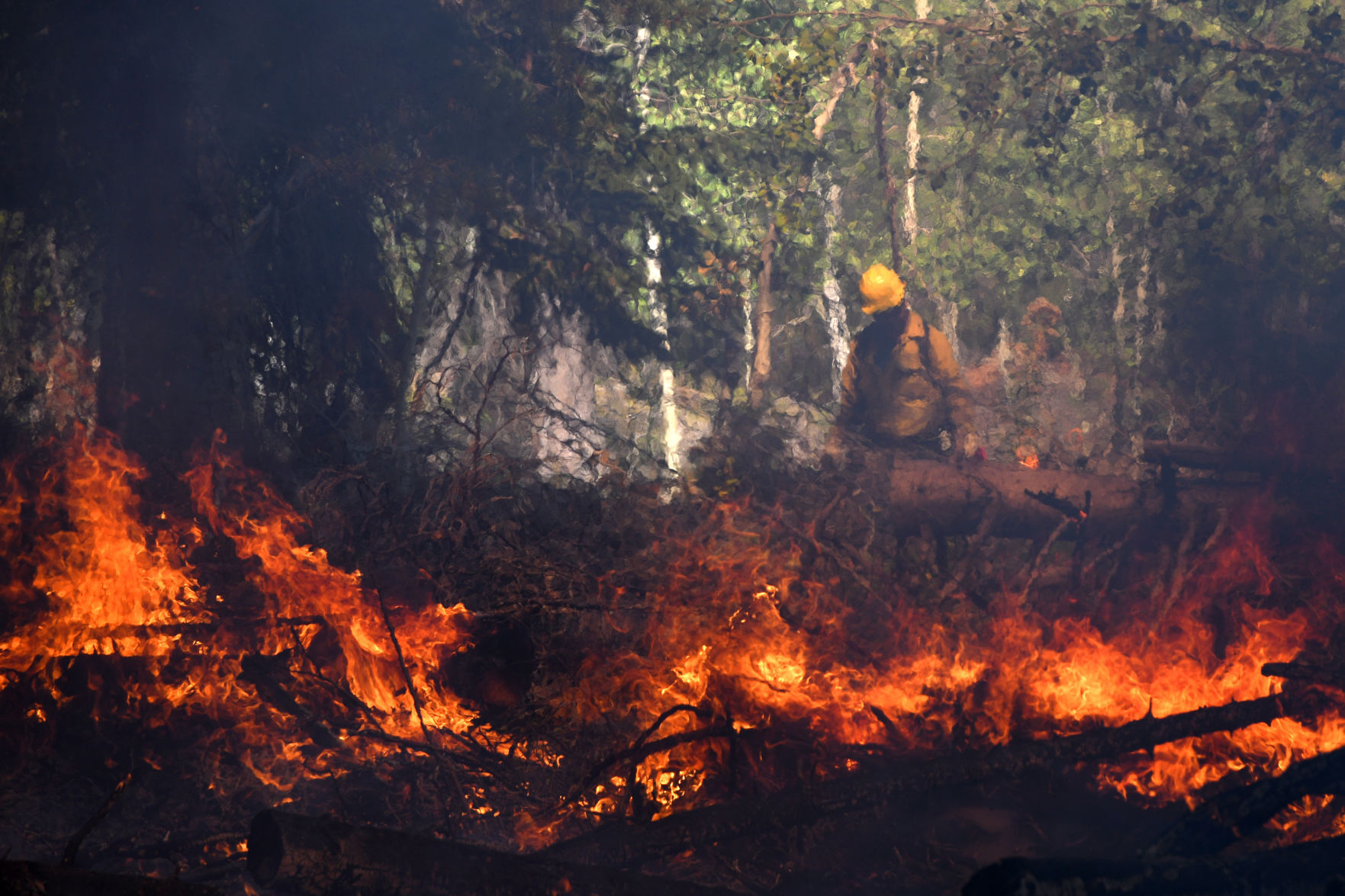
U.S. Forest Service District Wildlife Biologist Scott Soletti uses a drip torch at a prescribed burn last September in the South Hills. Scientists say fires throughout Idaho and the West are going to become increasingly common in the coming decades.
The fire problem

Fire Commissioner Barrett Craig, of the Jerome Rural Fire Department, waits for someone to turn on the water as he responds to a brush fire July 19, 2017, near the Blue Lakes Country Club in Jerome.
The fire problem

Members of the Filer Fire Department battle a blaze in 2013 north of Filer in the Snake River Canyon.
The fire problem

David Snelling, with Tatanka Hotshots from South Dakota, takes a brief break to eat after working to build defensive lines around homes to protect them from the Elk Fire Complex in 2013 northwest of Fairfield.
The fire problem

Firefighters battle the more than 700-acre Colorado Gulch fire in 2014 near Hailey.
The fire problem
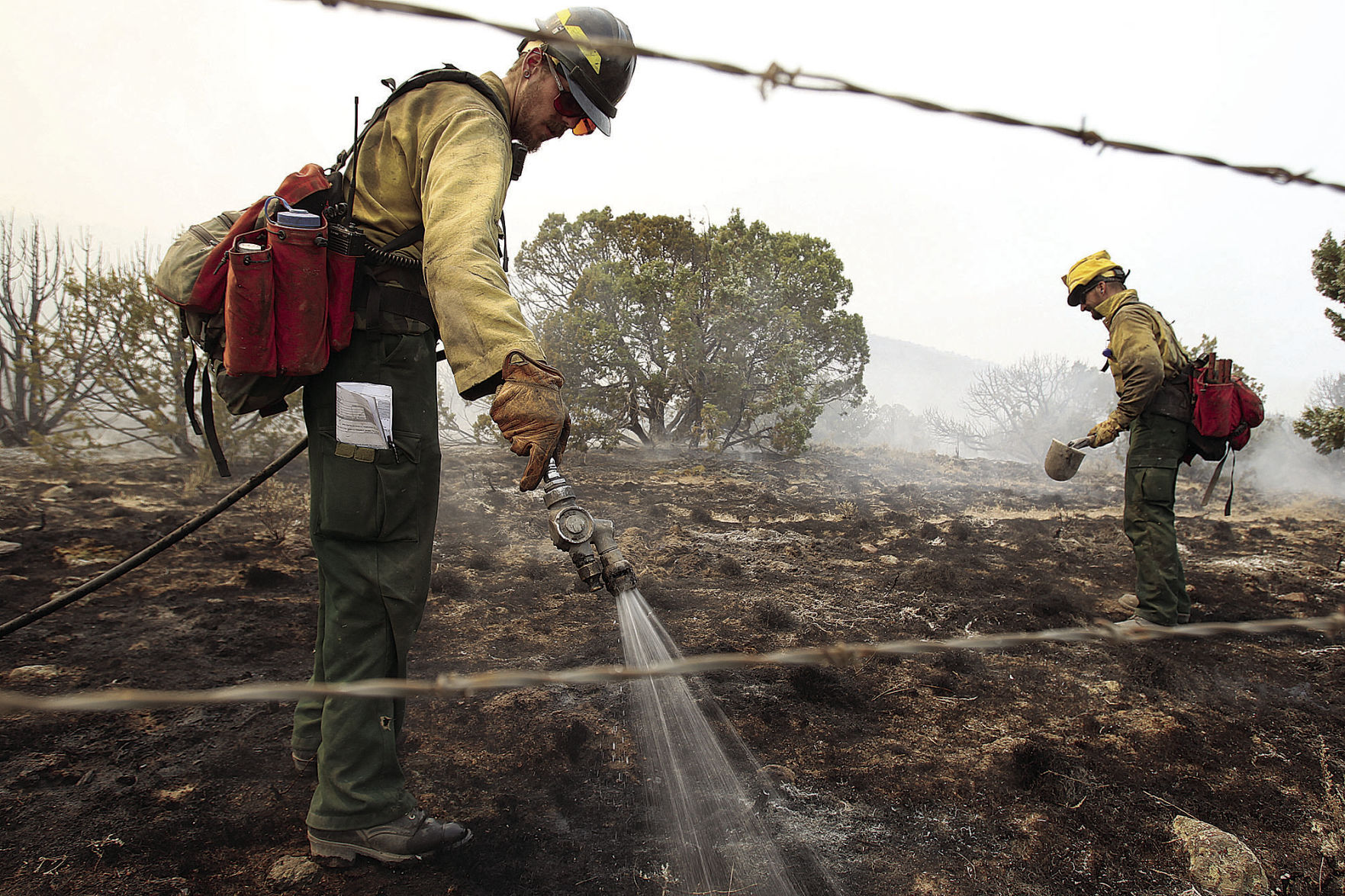
Members of the U.S. Bureau of Land Managment reinforce a line along the fence of a cattle ranch in 2012 south of Murtaugh while battling the Cave Canyon Fire, which burned almost 90,000 acres in the South Hills.
The fire problem
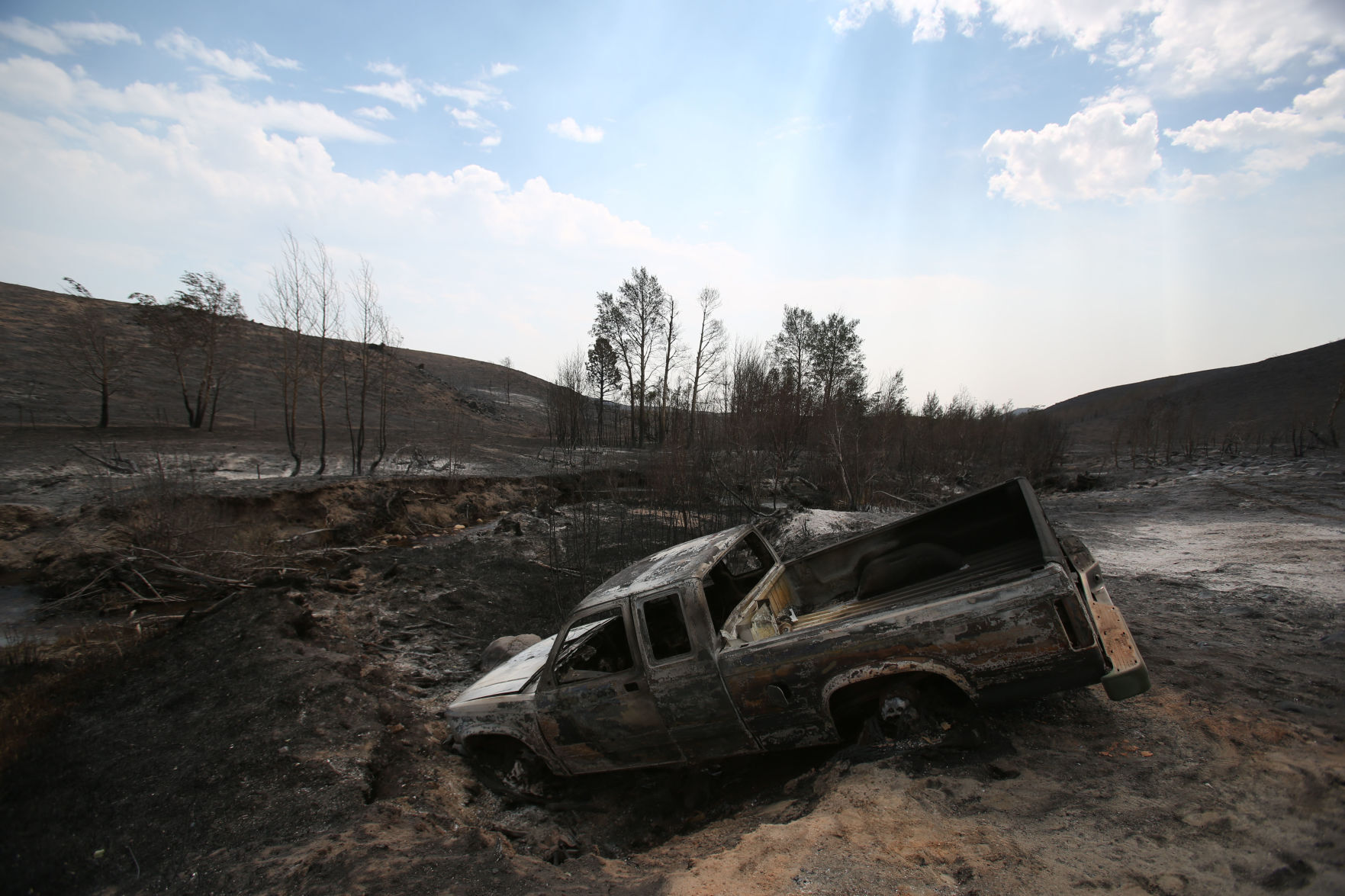
A view of Bill Corlett's property that burned during the McCan Fire in 2013 northwest of Fairfield.
The fire problem
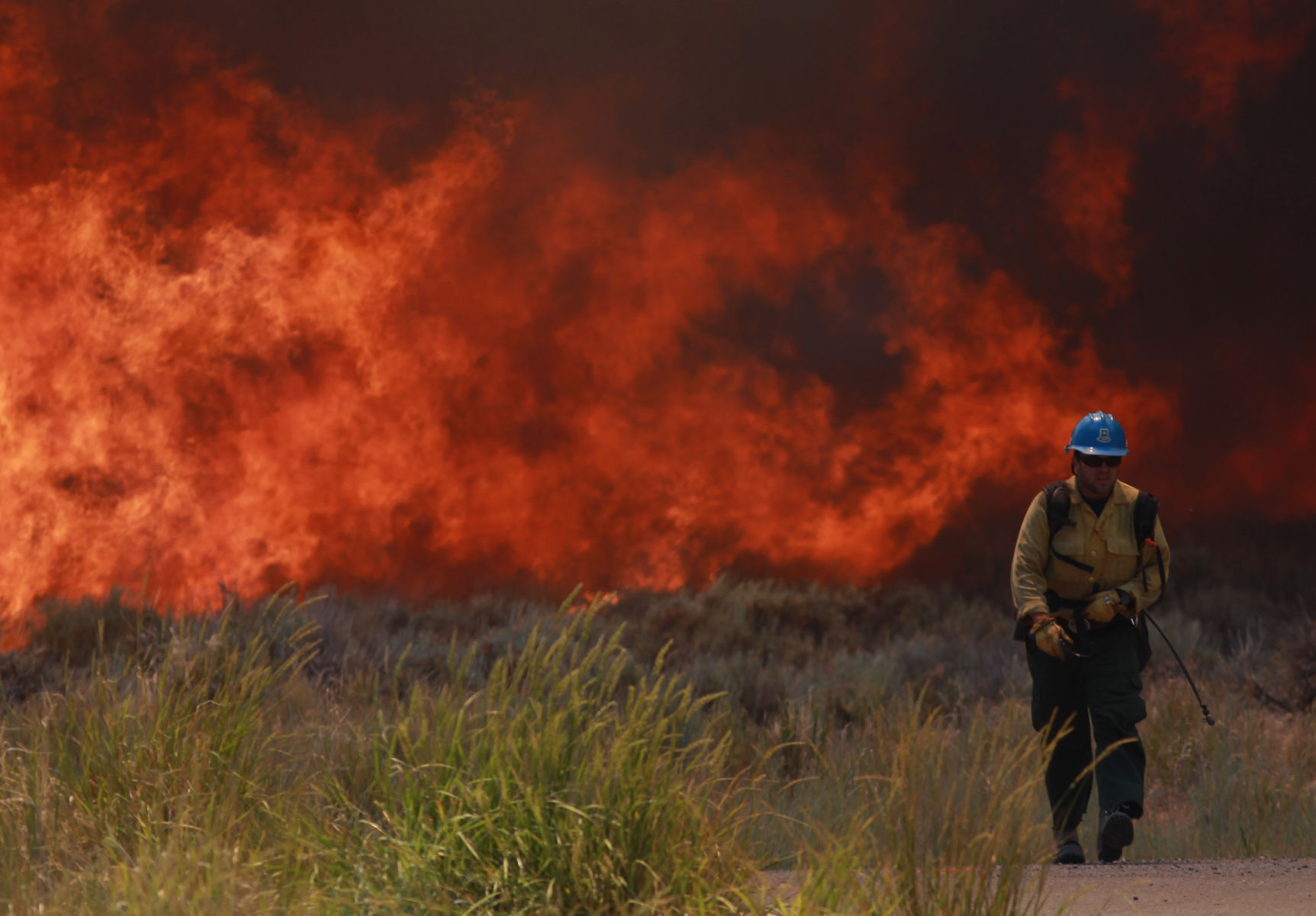
Firefighters battle the more than 700-acre Colorado Gulch in 2014 near Hailey.
The fire problem

Members of the Idaho City Hotshots walk along a dozer line in 2013 made to protect homes from the massive Elk Fire Complex northwest of Fairfield.
The Badger Fire changes the South Hills
This multi-part series on the Badger Fire explores its effects on South Hills wildlife, biology and ecology. See the whole series here.

The 90,000-acre Badger Fire has dramatically changed the South Hills landscape, for better and for worse.

It's time for part 2 of our series on the Badger Fire's impacts. It's a little lesson on the birds and the trees that you won't want to miss.

As the forest begins to regenerate after the Badger Fire, elk and moose will probably be OK. Mule deer — the South Hills' most abundant ungulate species — are going to struggle. But there are also things you can do to help them.

Loss of sage grouse habitat in the wake of the Badger Fire marks just the latest bad news for a struggling bird that's facing a handful of existential threats.

It's not clear when recreation will return to the South Hills or what it will look like when it does. But when it does, the people who use the area say they hope they'll be involved in making improvements.
Get used to big burns like the Badger Fire — climatologists say they're going to be happening more in the future.

Rehab efforts have already begun in the South Hills. The land is starting to come back.
The South Hills is criminally underrated.