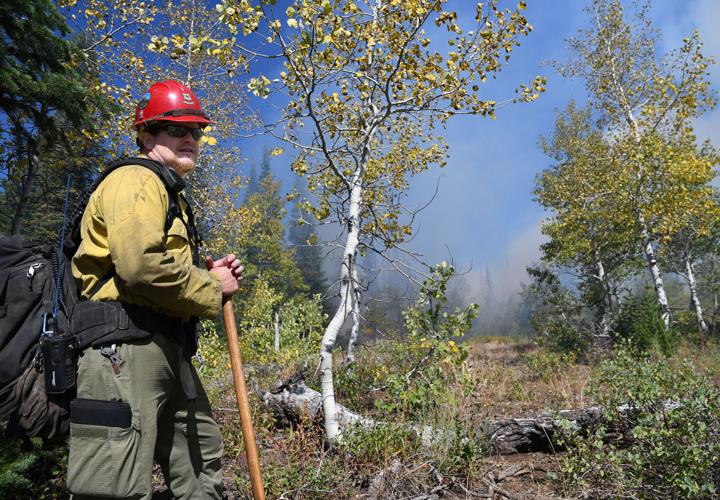
U.S. Forest Service District Wildlife Biologist Scott Soletti uses a drip torch at a prescribed burn last September in the South Hills. Scientists say fires throughout Idaho and the West are going to become increasingly common in the coming decades.
COLIN TIERNAN, TIMES-NEWS FILE
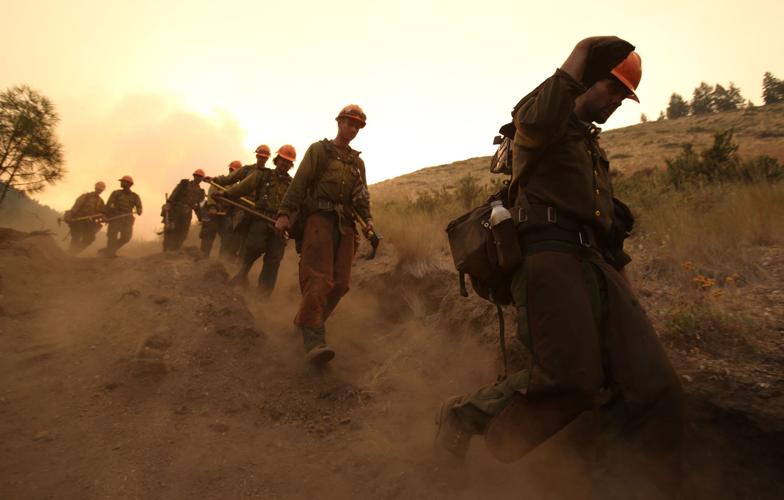
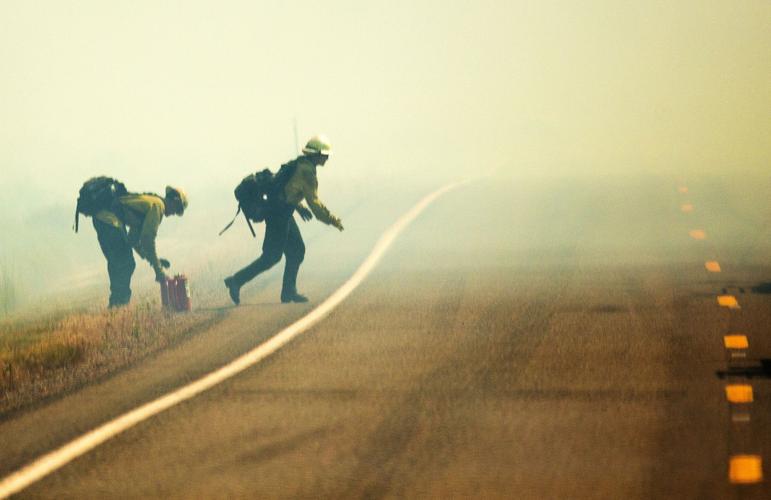
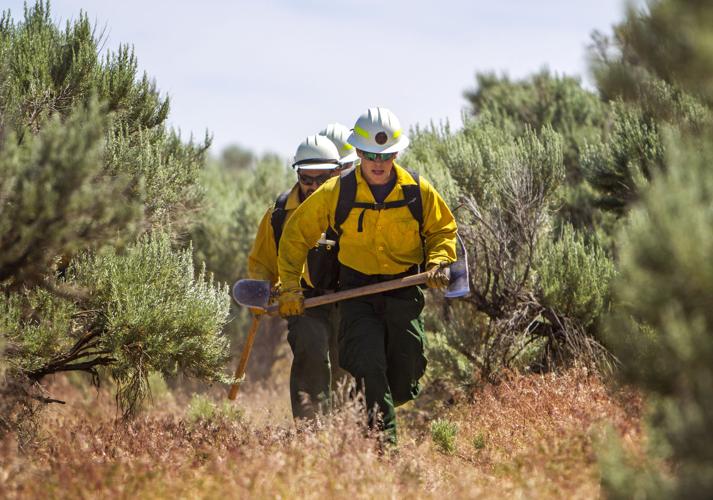
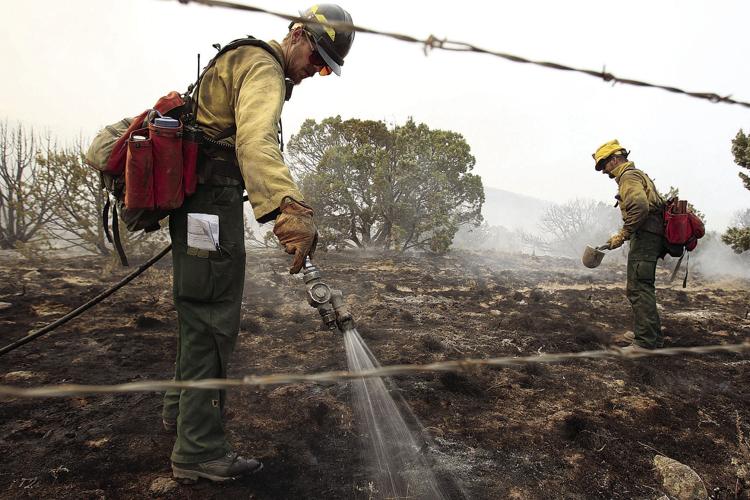
Members of the Idaho City Hotshots walk along a dozer line in 2013 made to protect homes from the massive Elk Fire Complex northwest of Fairfield.
TIMES-NEWS FILE
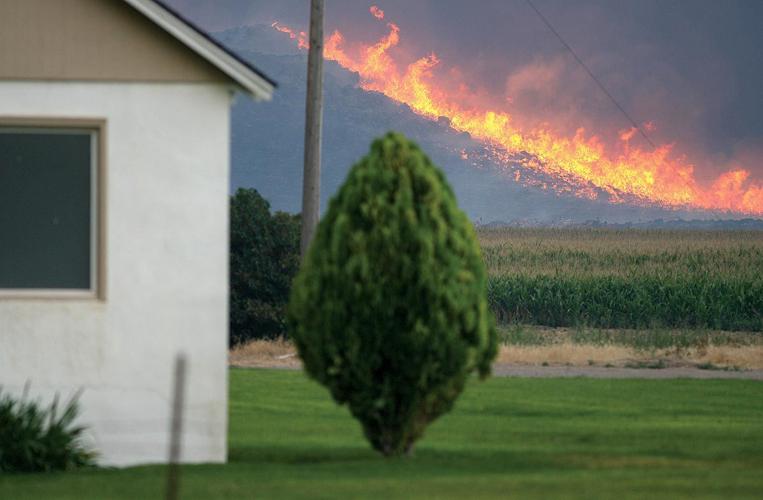
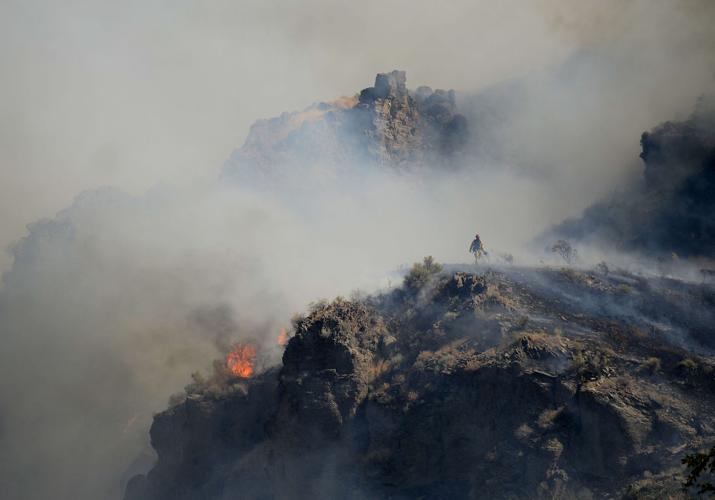
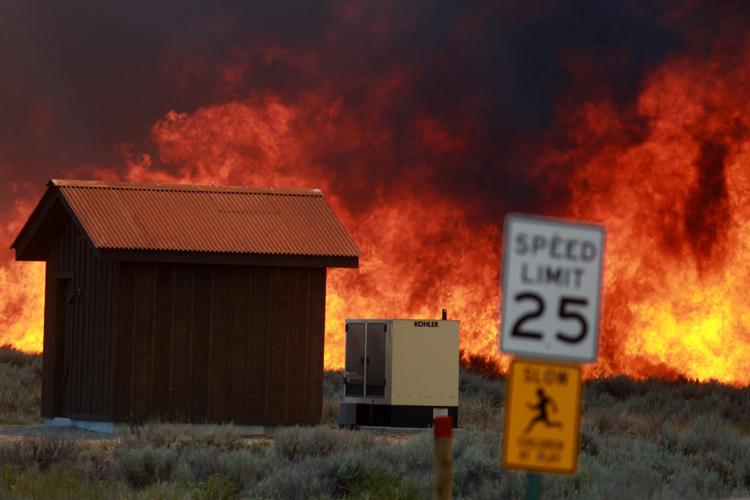
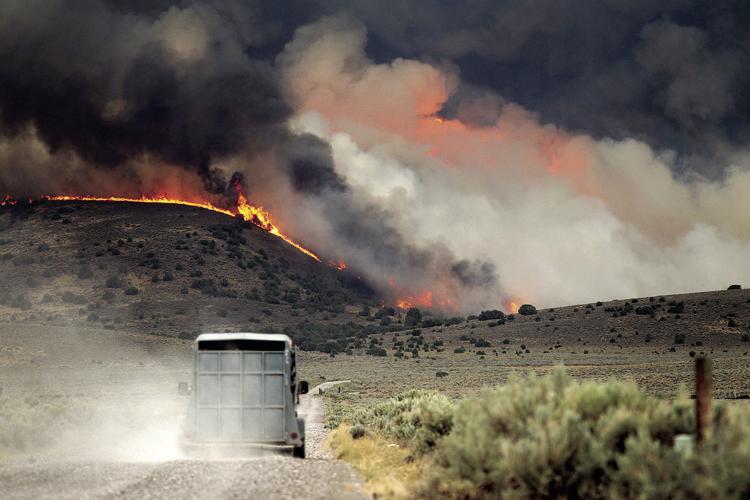
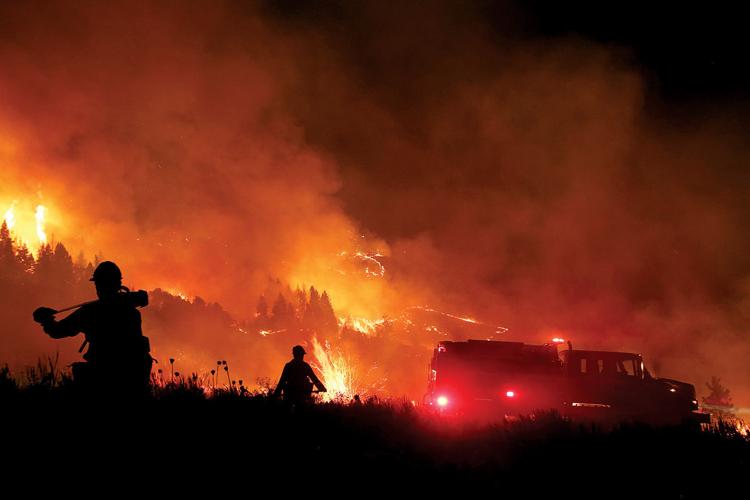
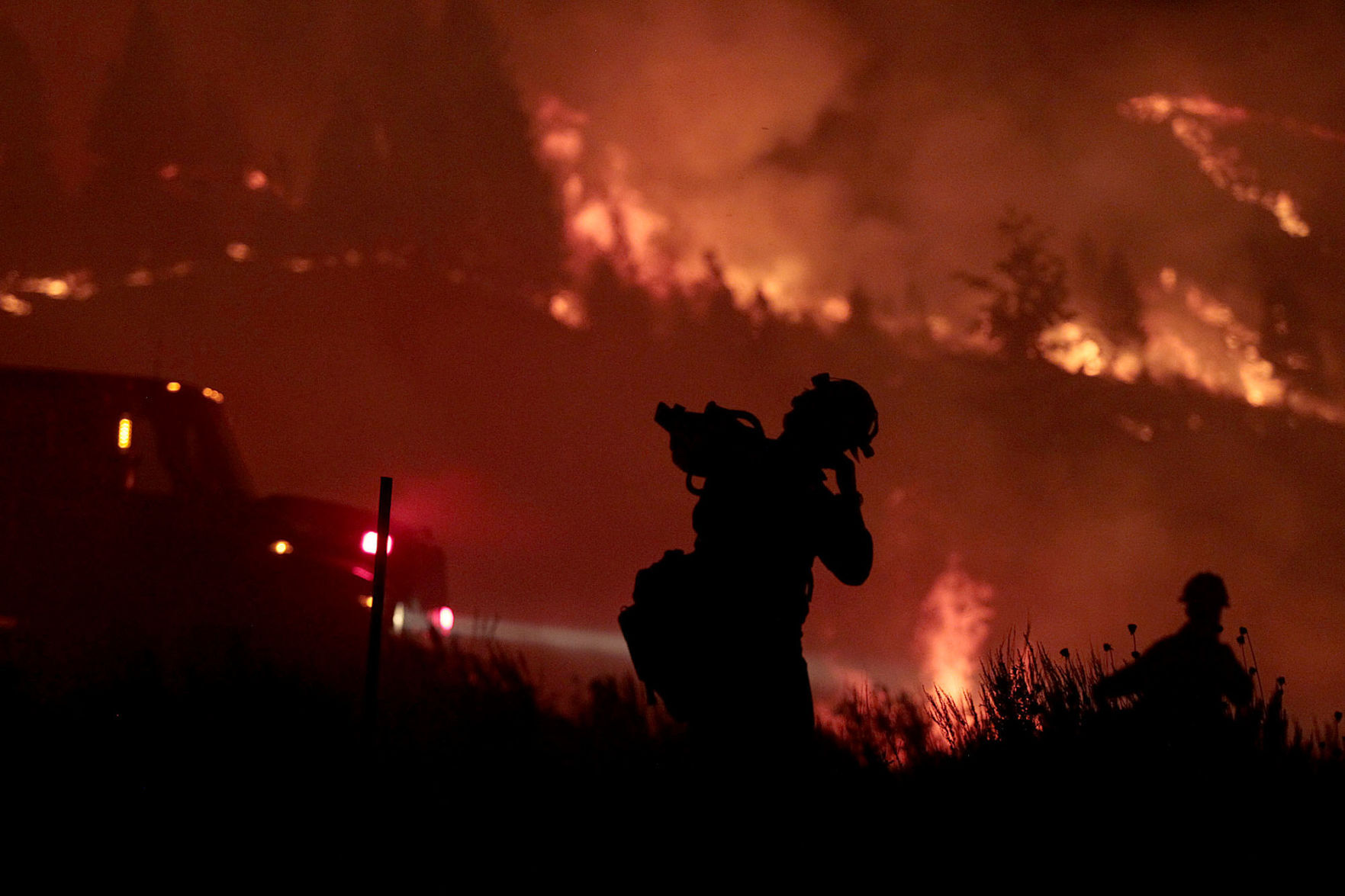
The Cave Canyon Fire, which burned nearly 90,000 acres in the South Hills in 2012, torches a hillside less than a mile from a home along 2900 North.
TIMES-NEWS FILE PHOTO
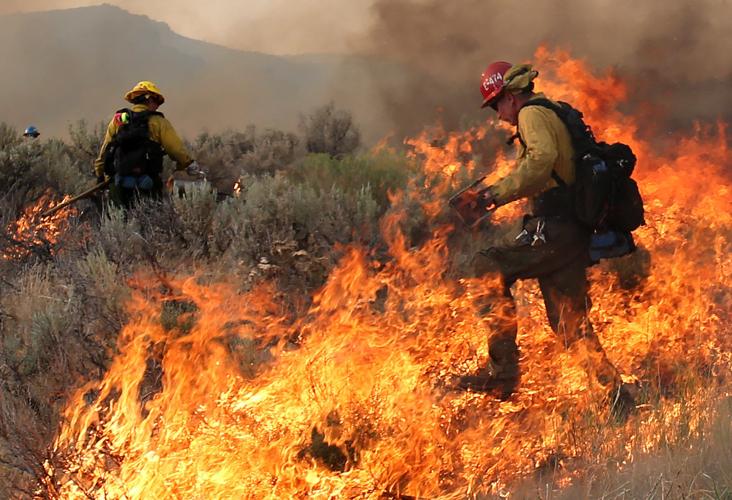
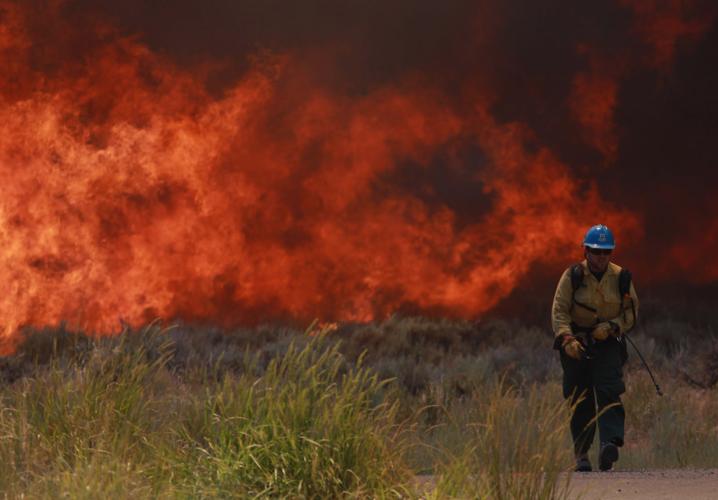
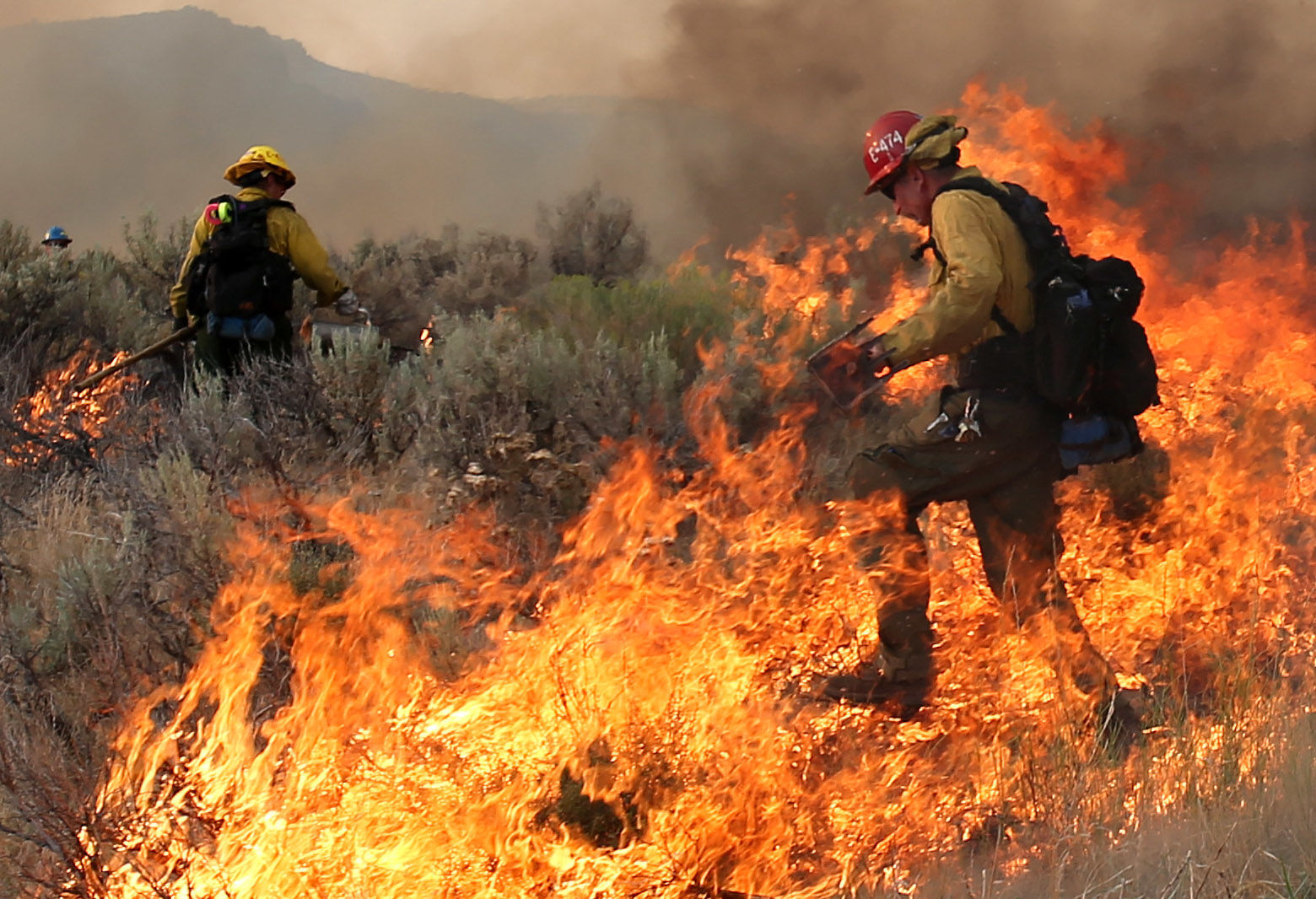
Members of the Idaho City Hotshots start a back burn in 2013 while battling the 111,000-acre Elk Fire Complex that burned more than 50 structures northwest of Fairfield.
TIMES-NEWS FILE
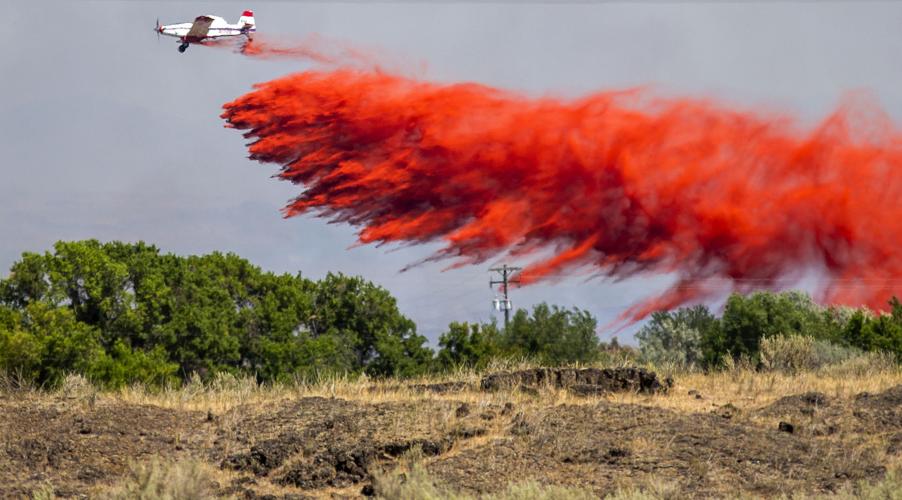
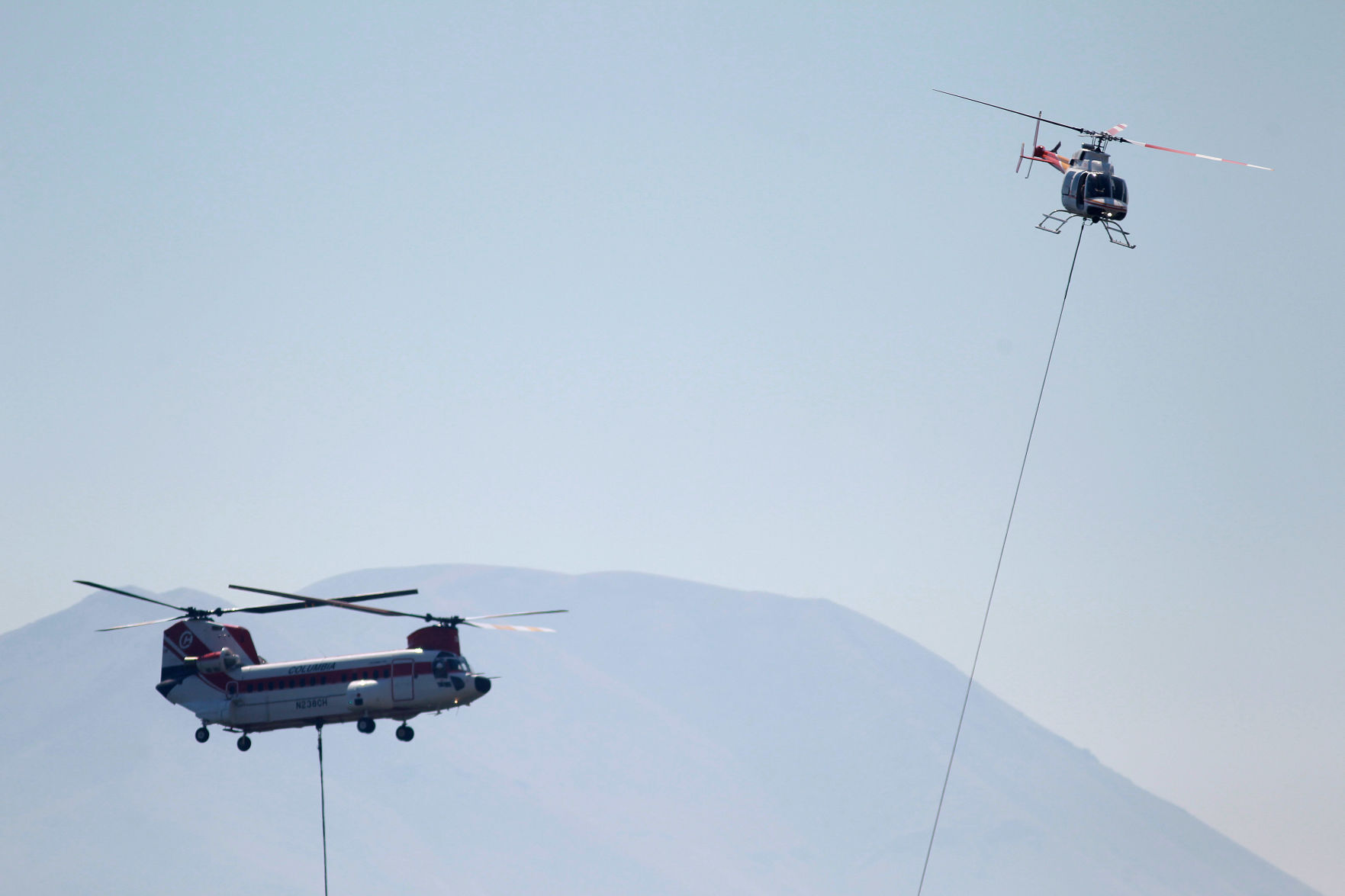
A plane drops a payload of fire retardant to help control the Drops Fire this summer directly outside Shoshone.
PAT SUTPHIN, TIMES-NEWS FILE
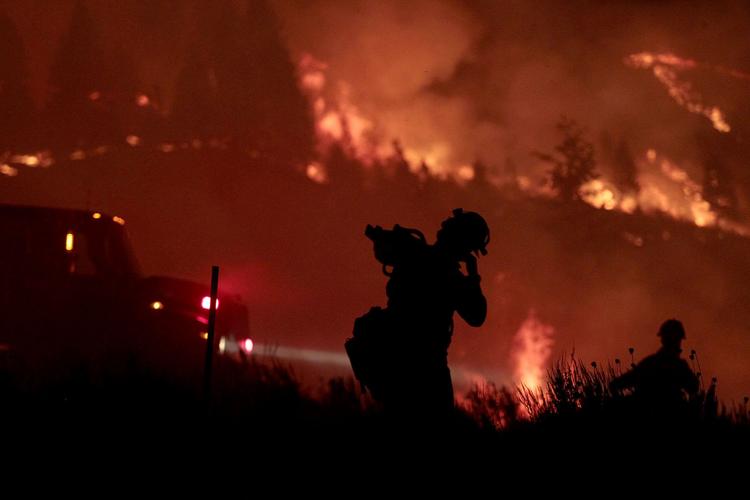
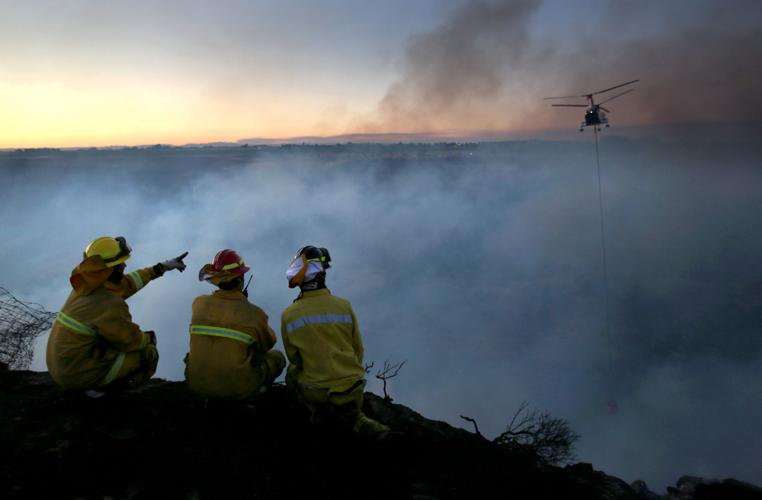
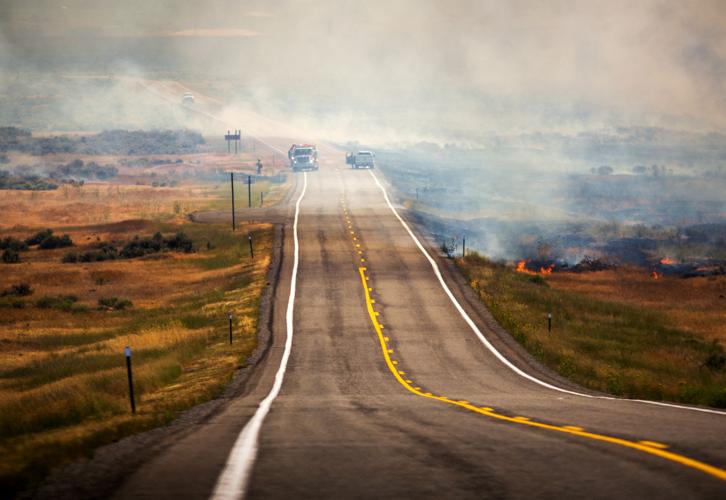
Crews prepare for the Dog Creek fire to jump Idaho 46 in 2018 north of Gooding.
PAT SUTPHIN, TIMES-NEWS FILE
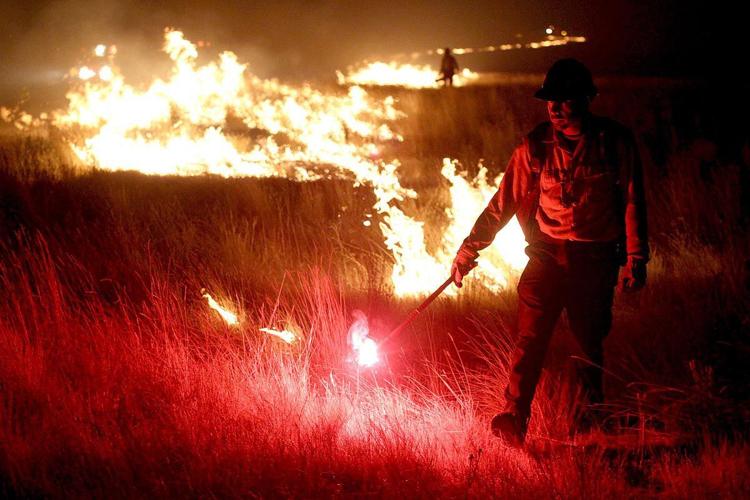
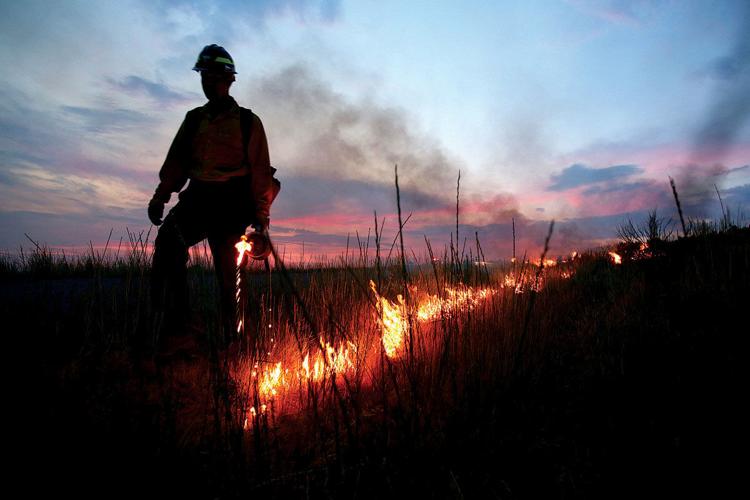
Chris Anthony, with the U.S. Bureau of Land Management, starts a back burn in 2013 on the 2,000-acre Bray Lake Fire north of Bliss.
TIMES-NEWS FILE
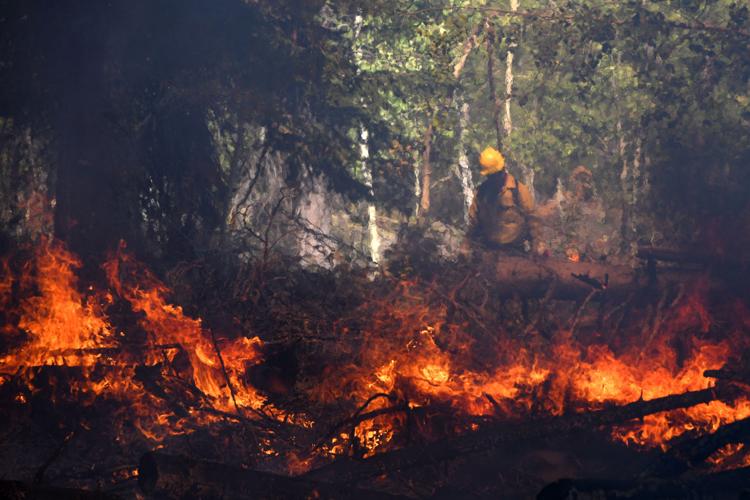
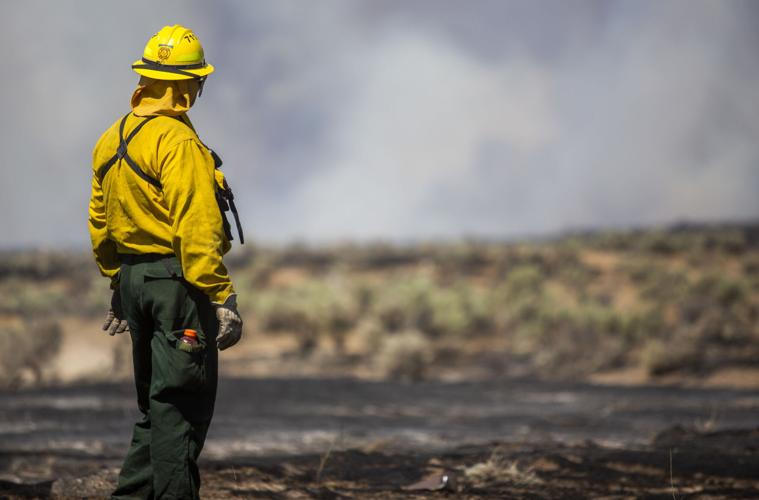
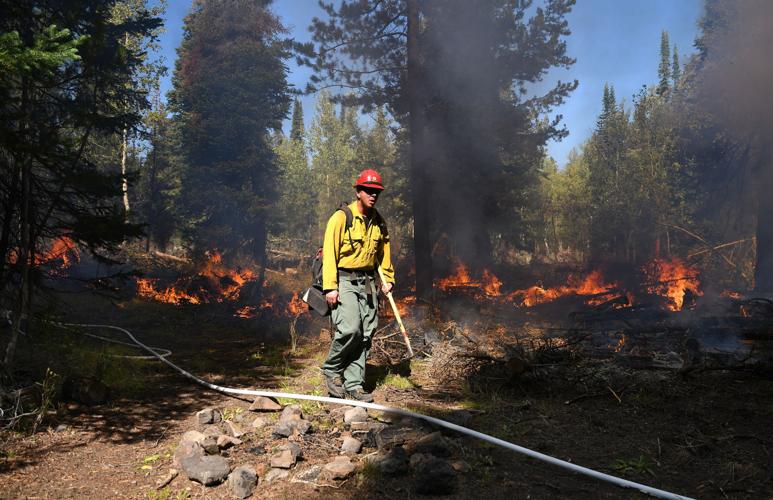
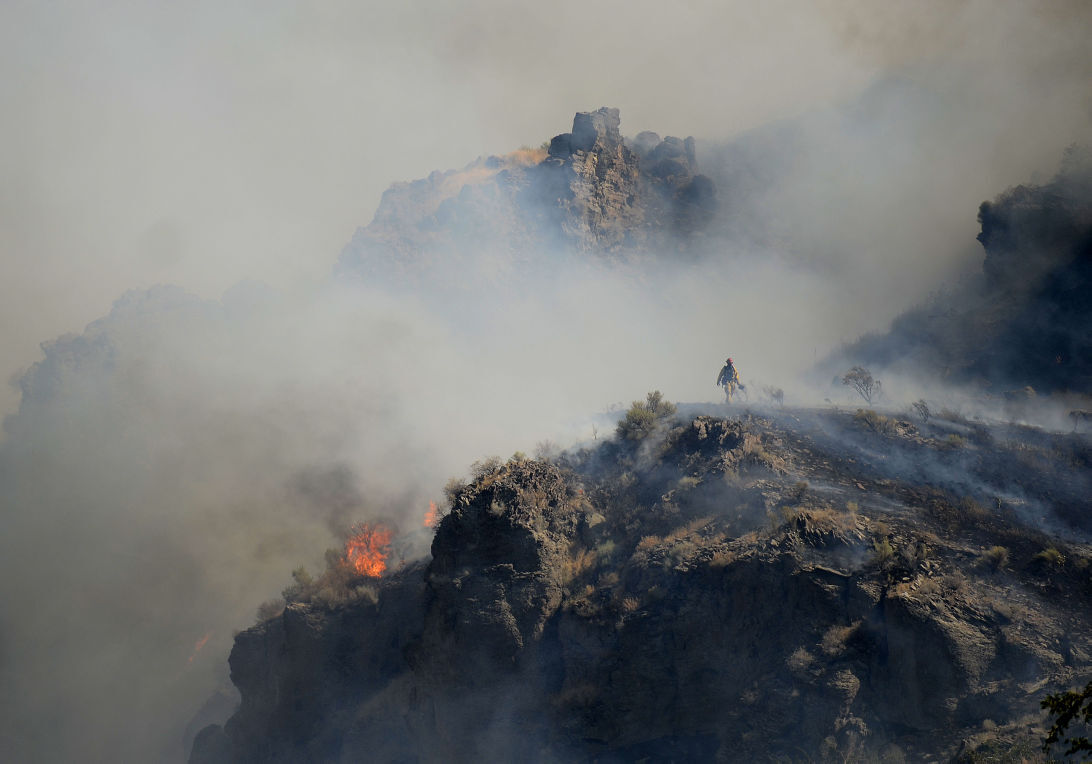
A firefighter with the Idaho City Hotshots looks for spot fires during a back burn along the Pine-Featherville Road in 2013 while battling the more than 90,000-acre Elk Fire Complex.
SOUTH HILLS — Firefighters marveled at how the Badger Fire bolted 10 or so miles down Rock Creek Canyon in just a day. The fire ate up wet, dense willow thickets along the creek edge that often survive blazes. The South Hills had never been more primed to burn than it was this September.
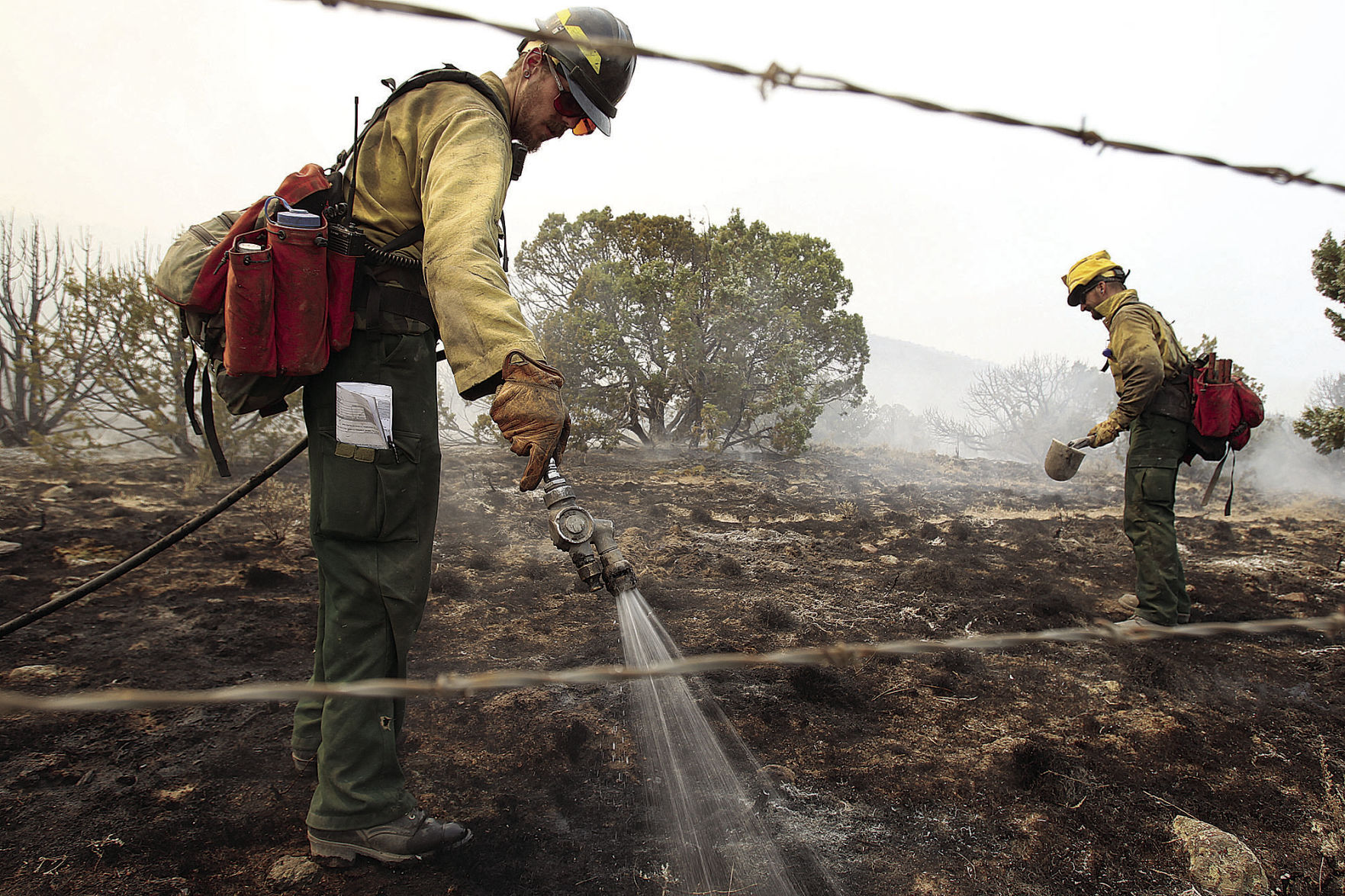
Members of the U.S. Bureau of Land Managment reinforce a line along the fence of a cattle ranch in 2012 south of Murtaugh while battling the Cave Canyon Fire, which burned almost 90,000 acres in the South Hills.
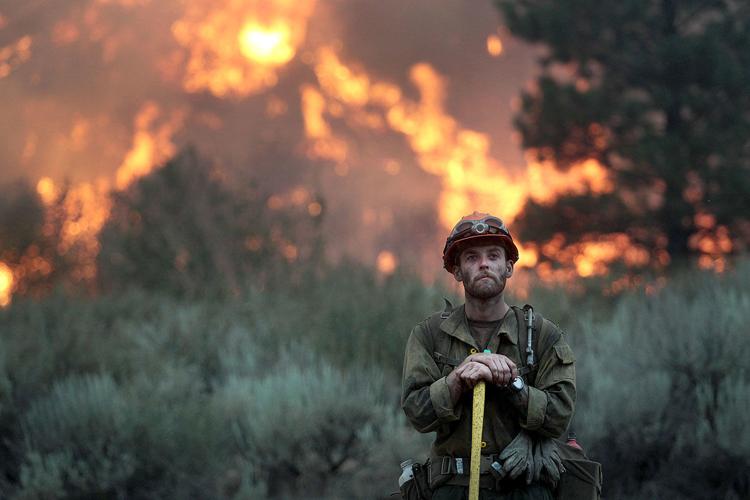
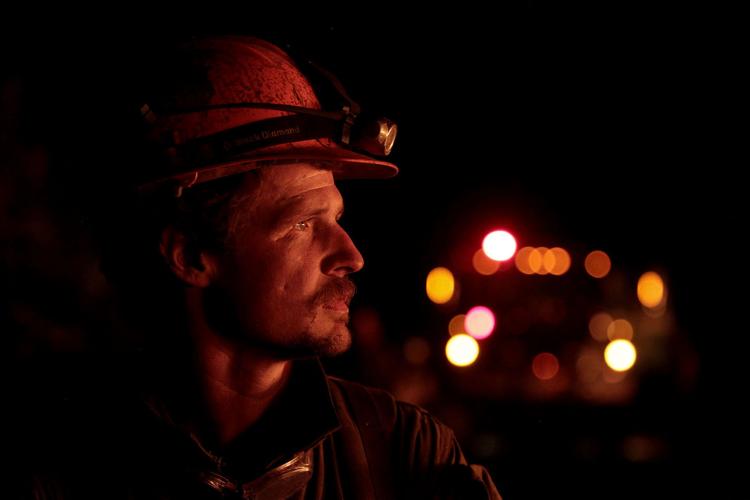
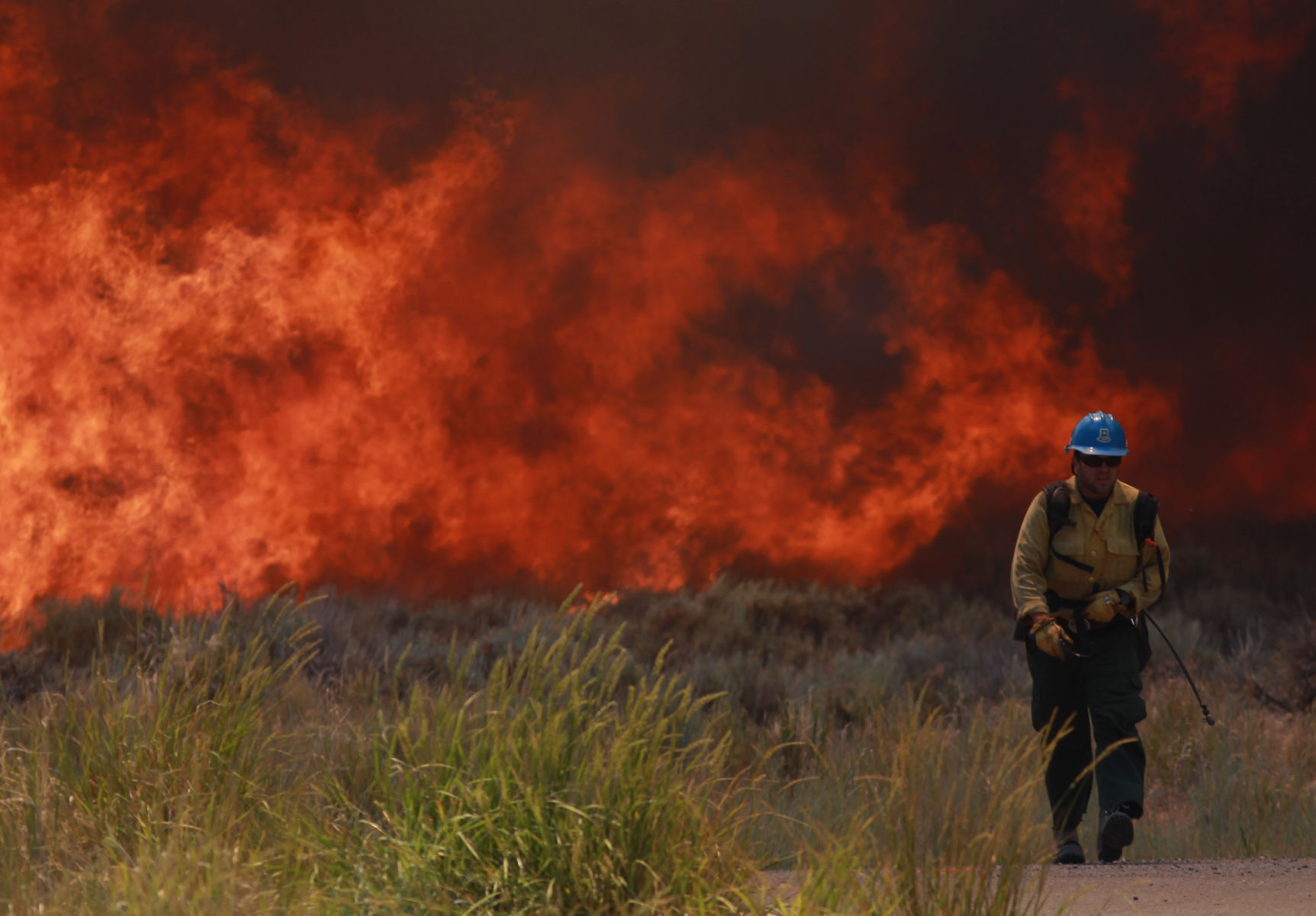
Tyler Kennedy, of the Idaho City Hotshots, monitors a back burn in 2013 at the 111,000-acre Elk Fire Complex that burned more than 50 structures northwest of Fairfield. Climate change, long-term fire suppression and invasive species are making wildfires increasingly common in the West.
A firefighter with the Idaho City Hotshots looks for spot fires during a back burn along the Pine-Featherville Road in 2013 while battling the more than 90,000-acre Elk Fire Complex.
Tyler Kennedy, of the Idaho City Hotshots, monitors a back burn in 2013 at the 111,000-acre Elk Fire Complex that burned more than 50 structures northwest of Fairfield. Climate change, long-term fire suppression and invasive species are making wildfires increasingly common in the West.
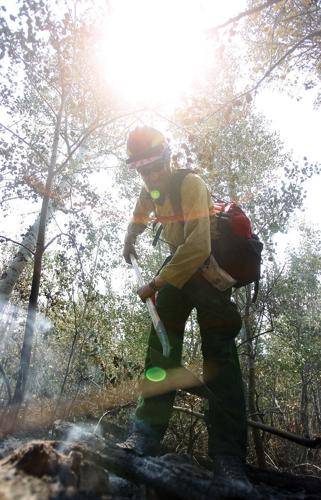
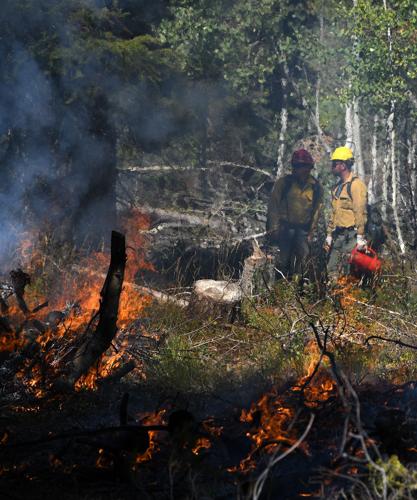
U.S. Forest Service District Wildlife Biologist Scott Soletti uses a drip torch at a prescribed burn last September in the South Hills. Scientists say fires throughout Idaho and the West are going to become increasingly common in the coming decades.
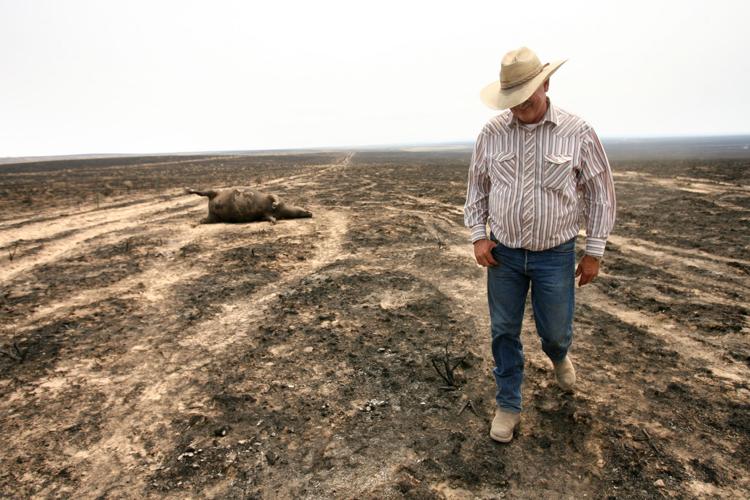
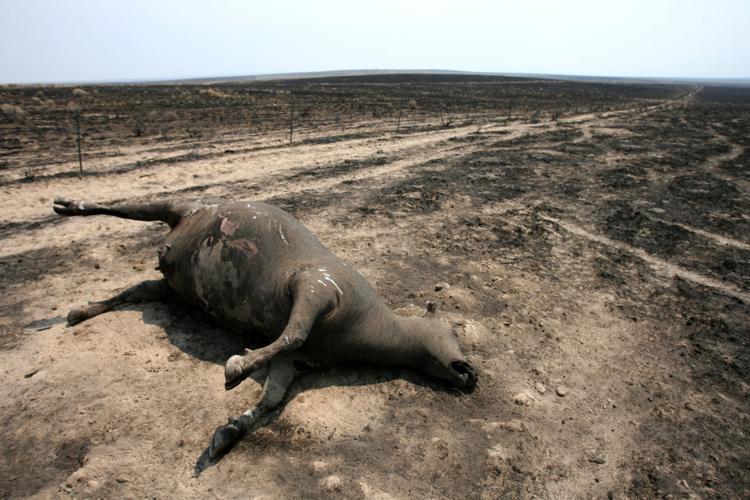
Bert Brackett pauses on July 24, 2007, while describing how the Murphy Complex Fire trapped and killed several of his cattle about 40 miles west of Rogerson.
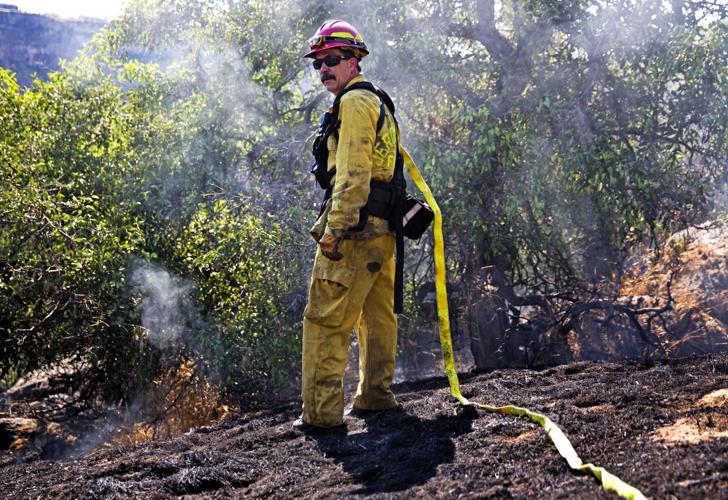
Fire Commissioner Barrett Craig, of the Jerome Rural Fire Department, waits for someone to turn on the water as he responds to a brush fire July 19, 2017, near the Blue Lakes Country Club in Jerome.
Members of the Idaho City Hotshots start a back burn in 2013 while battling the 111,000-acre Elk Fire Complex that burned more than 50 structures northwest of Fairfield.
Bureau of Land Management firefighters run to a safety area to deploy their emergency fire shelters as they run a drill to get ready for the National Preparedness Review on Thursday, June 14, 2018, at the Devil's Corral in Jerome County.
Members of the U.S. Bureau of Land Managment reinforce a line along the fence of a cattle ranch in 2012 south of Murtaugh while battling the Cave Canyon Fire, which burned almost 90,000 acres in the South Hills.
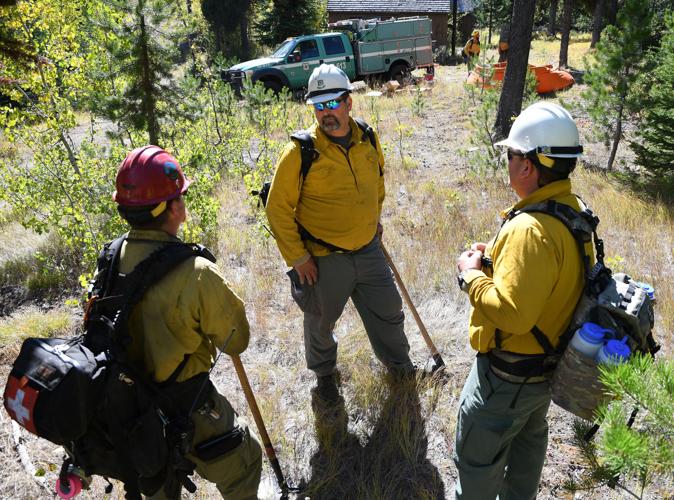
USFS Burn Boss Trainee Paul Mitchell, left, talks with forest service officers Lance Robinson and Josh Brinkley at a prescribed burn last September in the South Hills.
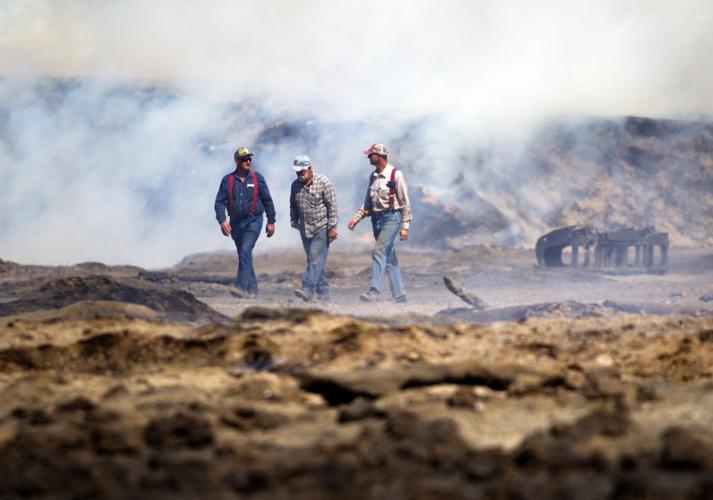
From left to right, Dan Zortman, Doug Pullin and Ron Bowman walk past a lumber pile still on fire Thursday, July 27, 2017, at Sticks and Stones in Shoshone Idaho. The Lagoon Fire covered 1,000 acres and burned most of the Sticks and Stone lumber yard.
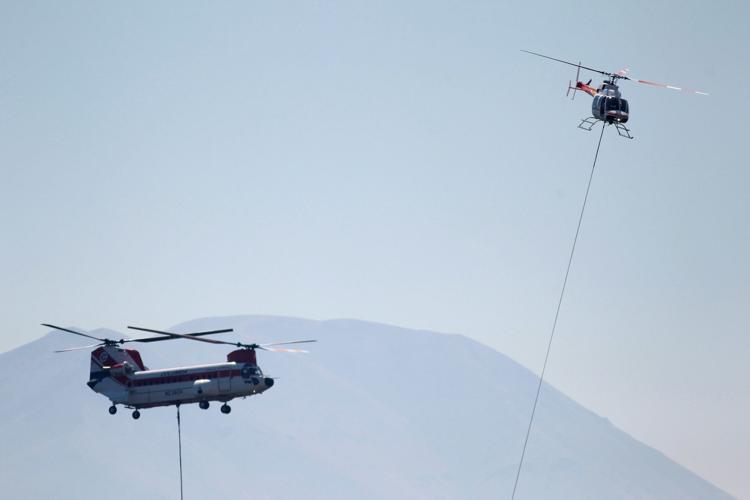
A view of the 30,000 acres Kinyon Road Fire west of Castleford in 2012. The BLM had 17 fire engines, five water tenders and number airplanes and helicopters battling the blaze at the time.
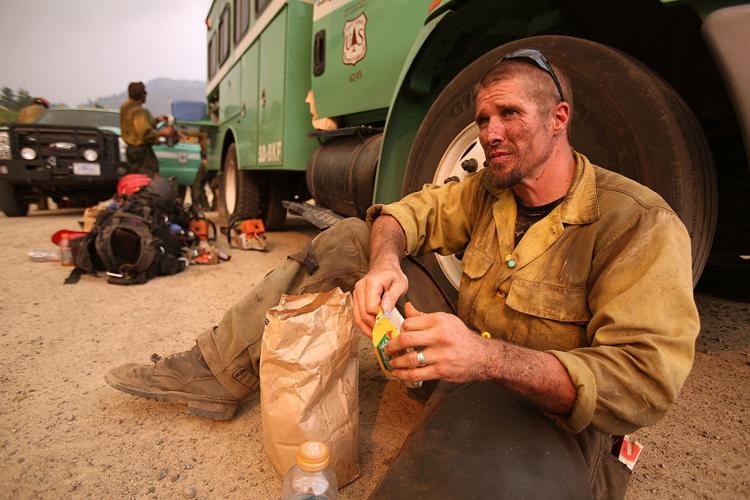
David Snelling, with Tatanka Hotshots from South Dakota, takes a brief break to eat after working to build defensive lines around homes to protect them from the Elk Fire Complex in 2013 northwest of Fairfield.
U.S. Forest Service Holding Boss Ryan Erickson walks along the edge of a prescribed burn Sept. 25, 2019, in the South Hills. The USFS, with help from other agencies, is increasing the number of acres it burns in an effort to mitigate negative impacts of wildfires and jump-start forest regeneration.
Chris Anthony, with the U.S. Bureau of Land Management, starts a back burn in 2013 on the 2,000-acre Bray Lake Fire north of Bliss.
The fire problem
TIMES-NEWS FILE
A firefighter with the Idaho City Hotshots looks for spot fires during a back burn along the Pine-Featherville Road in 2013 while battling the more than 90,000-acre Elk Fire Complex.
The fire problem
DREW NASH, TIMES-NEWS FILE
Jerome Rural Fire District and the Bureau of Land Management respond to a fire in the Snake River Canyon Monday, August 17, 2015, in Jerome County.
The fire problem
TIMES-NEWS FILE
Tyler Kennedy, of the Idaho City Hotshots, monitors a back burn in 2013 at the 111,000-acre Elk Fire Complex that burned more than 50 structures northwest of Fairfield. Climate change, long-term fire suppression and invasive species are making wildfires increasingly common in the West.
The fire problem
TIMES-NEWS FILE
Members of the Filer Fire Department battle a blaze in 2013 north of Filer in the Snake River Canyon.
The fire problem
COLIN TIERNAN, TIMES-NEWS FILE
U.S. Forest Service District Wildlife Biologist Scott Soletti uses a drip torch at a prescribed burn last September in the South Hills. Scientists say fires throughout Idaho and the West are going to become increasingly common in the coming decades.
The fire problem
TIMES-NEWS FILE
Bert Brackett pauses on July 24, 2007, while describing how the Murphy Complex Fire trapped and killed several of his cattle about 40 miles west of Rogerson.
The fire problem
TIMES-NEWS FILE
Members of the Idaho City Hotshots walk along a dozer line in 2013 made to protect homes from the massive Elk Fire Complex northwest of Fairfield.
The fire problem
TIMES-NEWS FILE
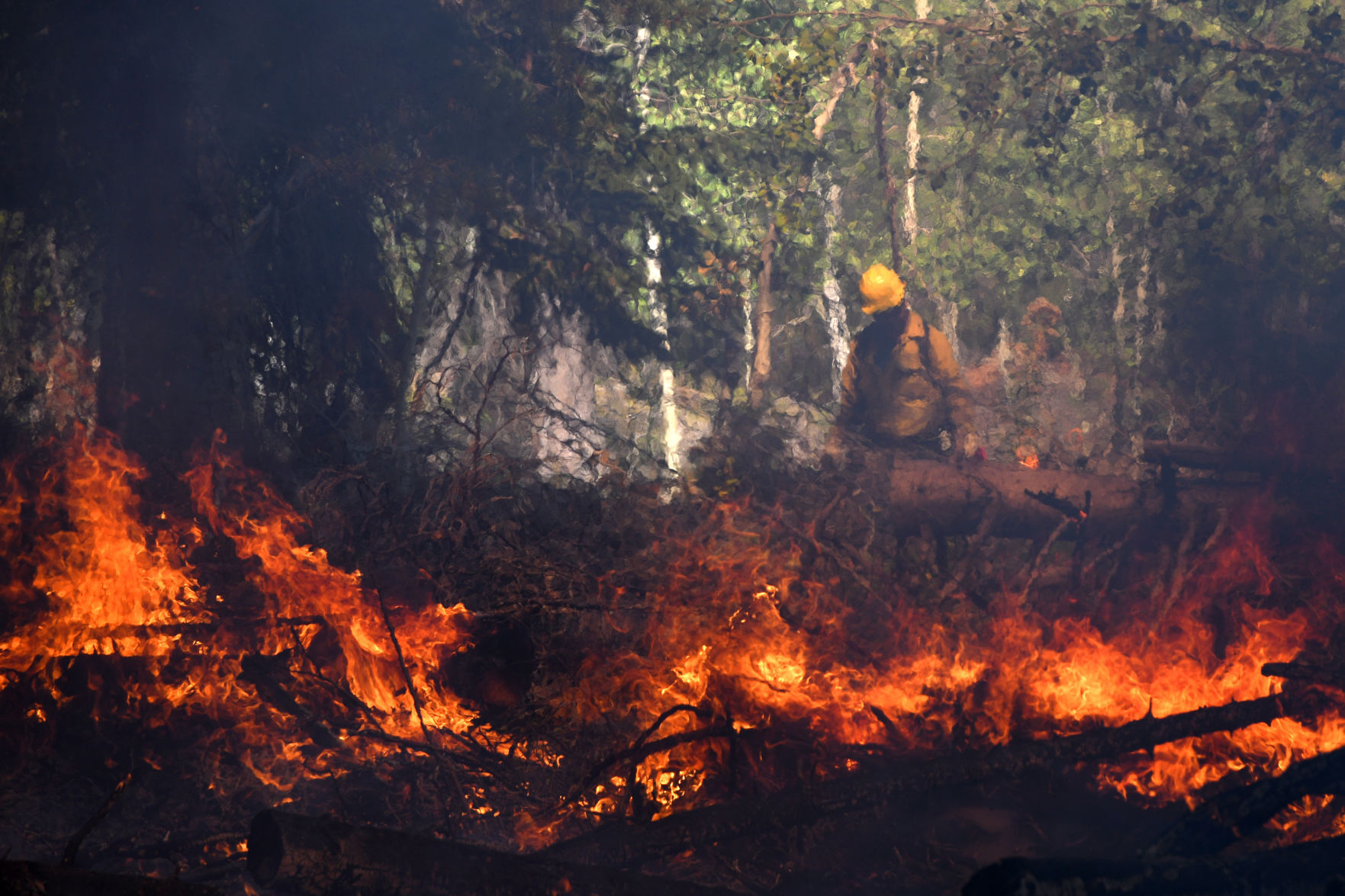
Tom Giesemann, a firefighter with the U.S. Forest Service, jumps through a back burn at the Fir Grove Fire in 2013 north of Gooding.
The fire problem
PAT SUTPHIN, TIMES-NEWS FILE
Fire Commissioner Barrett Craig, of the Jerome Rural Fire Department, waits for someone to turn on the water as he responds to a brush fire July 19, 2017, near the Blue Lakes Country Club in Jerome.
The fire problem
TIMES-NEWS FILE
Members of the Idaho City Hotshots start a back burn in 2013 while battling the 111,000-acre Elk Fire Complex that burned more than 50 structures northwest of Fairfield.
The fire problem
PAT SUTPHIN TIMES-NEWS FILE
Bureau of Land Management firefighters run to a safety area to deploy their emergency fire shelters as they run a drill to get ready for the National Preparedness Review on Thursday, June 14, 2018, at the Devil's Corral in Jerome County.
The fire problem
PAT SUTPHIN, TIMES-NEWS FILE
Lt. Derek Oliver, of the Shoshone Fire Department, watches as the Drops Fire burns more than 2,000 acres this summer near Shoshone.
The fire problem
PAT SUTPHIN, TIMES-NEWS FILE
A plane drops a payload of fire retardant to help control the Drops Fire this summer directly outside Shoshone.
The fire problem
TIMES-NEWS FILE PHOTO
The Cave Canyon Fire, which burned nearly 90,000 acres in the South Hills in 2012, torches a hillside less than a mile from a home along 2900 North.
The fire problem
TIMES-NEWS FILE
Members of the U.S. Bureau of Land Managment reinforce a line along the fence of a cattle ranch in 2012 south of Murtaugh while battling the Cave Canyon Fire, which burned almost 90,000 acres in the South Hills.
The fire problem
TIMES-NEWS FILE
The Colorado Gulch fire in July 2014 rages near Hailey.
The fire problem
TIMES-NEWS FILE
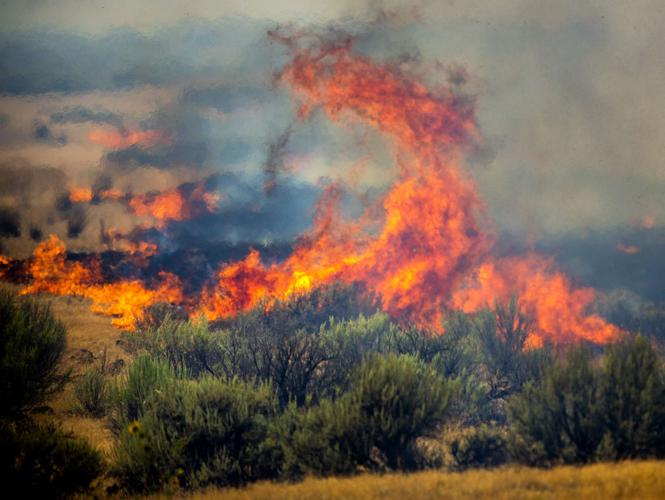
Firefighters battle the more than 700-acre Colorado Gulch fire in 2014 near Hailey.
The fire problem
COLIN TIERNAN, TIMES-NEWS FILE
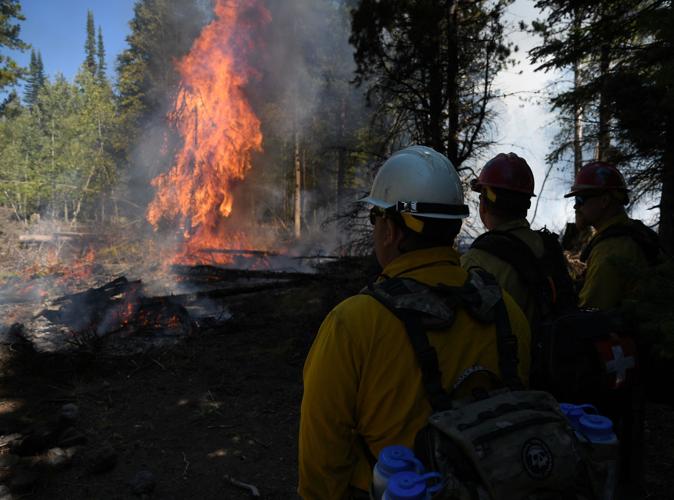
U.S. Forest Service firefighters watch a tree erupt into flame Sept. 25 at a prescribed burn in the South Hills.
The fire problem
COLIN TIERNAN, TIMES-NEWS FILE
USFS Burn Boss Trainee Paul Mitchell, left, talks with forest service officers Lance Robinson and Josh Brinkley at a prescribed burn last September in the South Hills.
The fire problem
TIMES-NEWS FILE
A view of the 30,000 acre Cave Canyon Fire near Oakley on Wednesday Aug. 8, 2012.
The fire problem
TIMES-NEWS FILE
Shawn Torres, of the U.S. Bureau of Land Management, starts a back burn in 2012 while battling the Kinyon Road Fire.
The fire problem
PAT SUTPHIN, TIMES-NEWS FILE
From left to right, Dan Zortman, Doug Pullin and Ron Bowman walk past a lumber pile still on fire Thursday, July 27, 2017, at Sticks and Stones in Shoshone Idaho. The Lagoon Fire covered 1,000 acres and burned most of the Sticks and Stone lumber yard.
The fire problem
TIMES-NEWS FILE
A view of the 30,000 acres Kinyon Road Fire west of Castleford in 2012. The BLM had 17 fire engines, five water tenders and number airplanes and helicopters battling the blaze at the time.
The fire problem
PAT SUTPHIN, TIMES-NEWS FILE
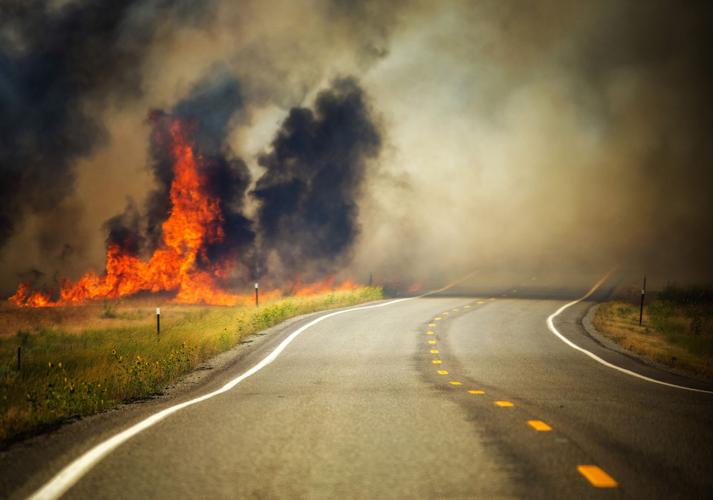
The Dog Creek Fire starts to jump Idaho 46 in 2018 north of Gooding.
The fire problem
TIMES-NEWS FILE
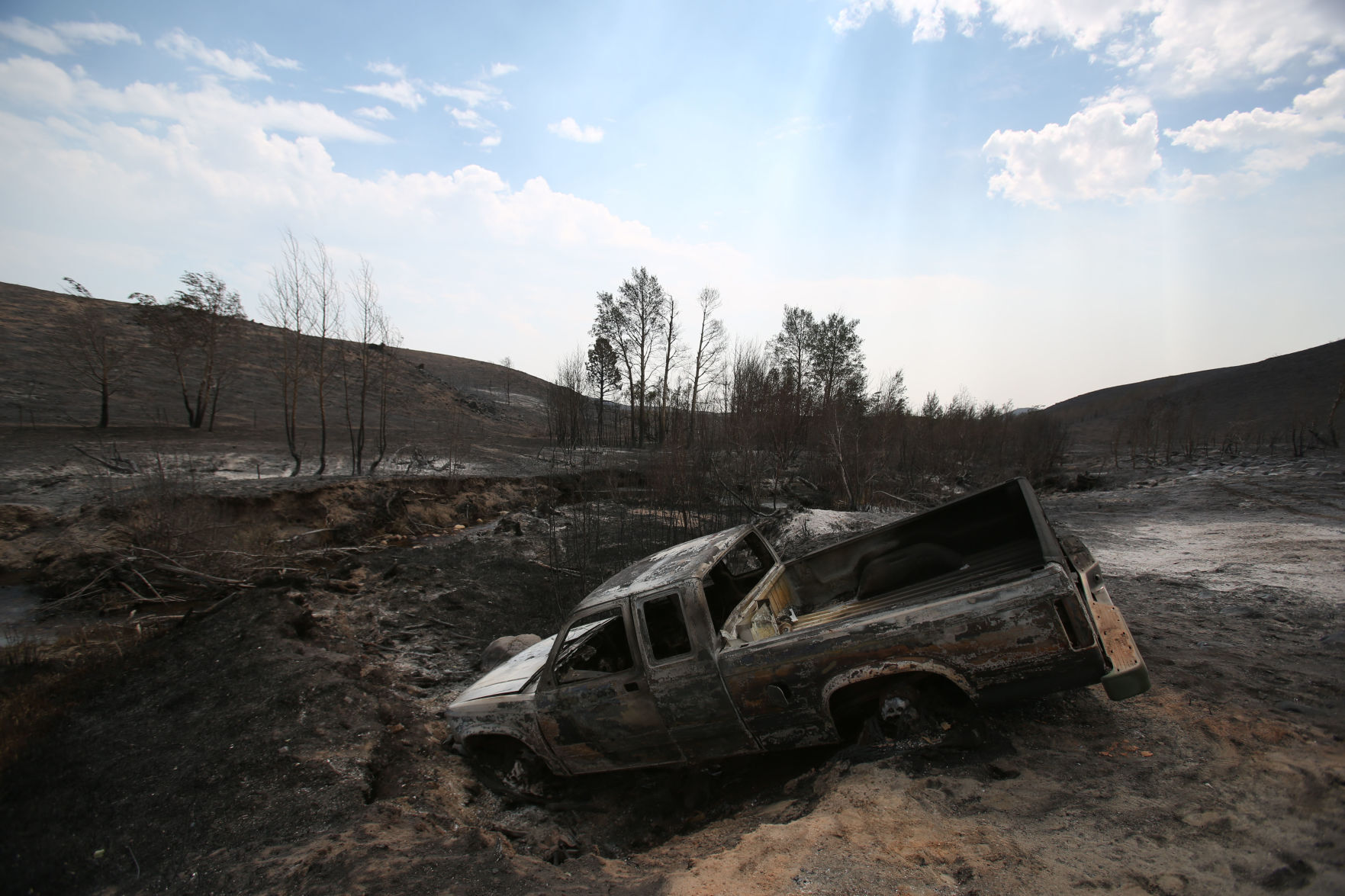
A view of Bill Corlett's property that burned during the McCan Fire in 2013 northwest of Fairfield.
The fire problem
PAT SUTPHIN, TIMES-NEWS FILE
The Dog Creek fire burns Tuesday, July 17, 2018, north of Gooding.
The fire problem
PAT SUTPHIN, TIMES-NEWS FILE
Crews prepare for the Dog Creek fire to jump Idaho 46 on in 2018 north of Gooding.
The fire problem
PAT SUTPHIN, TIMES-NEWS FILE
Crews prepare for the Dog Creek fire to jump Idaho 46 in 2018 north of Gooding.
The fire problem
PAT SUTPHIN, TIMES-NEWS FILE
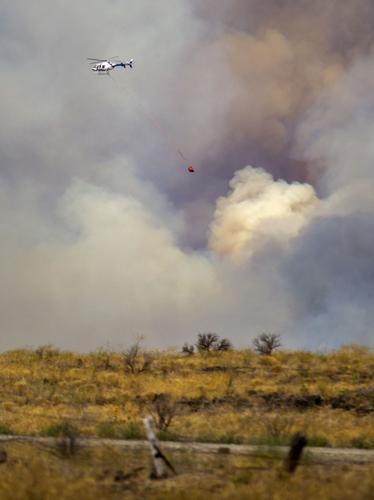
A helicopter drops a payload of water to try and control the Drops Fire as it spreads more than 2,000 acres this summer near Shoshone.
The fire problem
TIMES-NEWS FILE
David Snelling, with Tatanka Hotshots from South Dakota, takes a brief break to eat after working to build defensive lines around homes to protect them from the Elk Fire Complex in 2013 northwest of Fairfield.
The fire problem
TIMES-NEWS FILE
BLM firefighter Lou Prill, out of Alaska, mops up parts of the Cave Canyon Fire in the South Hills back in 2012.
The fire problem
TIMES-NEWS FILE
Firefighters battle the more than 700-acre Colorado Gulch in 2014 near Hailey.
The fire problem
COLIN TIERNAN, TIMES-NEWS FILE
Will Creeden, left, and Scott Soletti work on a prescribed burn Sept. 25, 2019, in the South Hills south of Hansen.
The fire problem
TIMES-NEWS FILE
One of rancher Bert Brackett's cows lies dead on the ground in July 2007 just days after the Murphy Complex Fire swept through.
The fire problem
PAT SUTPHIN TIMES-NEWS FILE
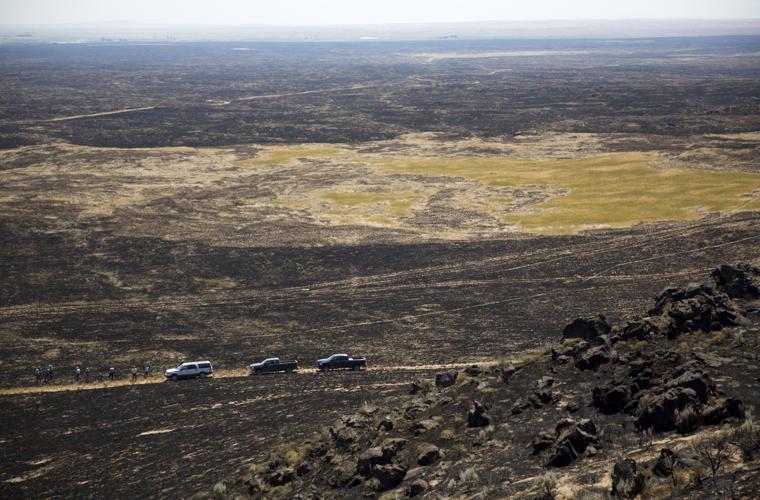
Range recovery specialists perform a fire recovery assessment in 2017 near the Notch Butte in Shoshone.
The fire problem
COLIN TIERNAN, TIMES-NEWS FILE
U.S. Forest Service Burn Boss Trainee Paul Mitchell talks about a prescribed burn Sept. 25, 2019, in the South Hills.
The fire problem
COLIN TIERNAN, TIMES-NEWS FILE
U.S. Forest Service Holding Boss Ryan Erickson walks along the edge of a prescribed burn Sept. 25, 2019, in the South Hills. The USFS, with help from other agencies, is increasing the number of acres it burns in an effort to mitigate negative impacts of wildfires and jump-start forest regeneration.
The fire problem
TIMES-NEWS FILE
Members of the Idaho City Hotshots start a back burn on Aug. 13, 2013, to combat the 111,000 acre Elk Fire Complex northwest of Fairfield.
Bert Brackett pauses on July 24, 2007, while describing how the Murphy Complex Fire trapped and killed several of his cattle about 40 miles west of Rogerson.
A firefighter with the Idaho City Hotshots looks for spot fires during a back burn along the Pine-Featherville Road in 2013 while battling the more than 90,000-acre Elk Fire Complex.
TIMES-NEWS FILE
The fire problem
Tom Giesemann, a firefighter with the U.S. Forest Service, jumps through a back burn at the Fir Grove Fire in 2013 north of Gooding.
TIMES-NEWS FILE
The fire problem
Tyler Kennedy, of the Idaho City Hotshots, monitors a back burn in 2013 at the 111,000-acre Elk Fire Complex that burned more than 50 structures northwest of Fairfield. Climate change, long-term fire suppression and invasive species are making wildfires increasingly common in the West.
TIMES-NEWS FILE
The fire problem
Chris Anthony, with the U.S. Bureau of Land Management, starts a back burn in 2013 on the 2,000-acre Bray Lake Fire north of Bliss.
TIMES-NEWS FILE
The fire problem
Members of the Idaho City Hotshots start a back burn in 2013 while battling the 111,000-acre Elk Fire Complex that burned more than 50 structures northwest of Fairfield.
TIMES-NEWS FILE
The fire problem
Bert Brackett pauses on July 24, 2007, while describing how the Murphy Complex Fire trapped and killed several of his cattle about 40 miles west of Rogerson.
TIMES-NEWS FILE
The fire problem
Jerome Rural Fire District and the Bureau of Land Management respond to a fire in the Snake River Canyon Monday, August 17, 2015, in Jerome County.
DREW NASH, TIMES-NEWS FILE
The fire problem
A plane drops a payload of fire retardant to help control the Drops Fire this summer directly outside Shoshone.
PAT SUTPHIN, TIMES-NEWS FILE
The fire problem
U.S. Forest Service District Wildlife Biologist Scott Soletti uses a drip torch at a prescribed burn last September in the South Hills. Scientists say fires throughout Idaho and the West are going to become increasingly common in the coming decades.
COLIN TIERNAN, TIMES-NEWS FILE
The fire problem
Fire Commissioner Barrett Craig, of the Jerome Rural Fire Department, waits for someone to turn on the water as he responds to a brush fire July 19, 2017, near the Blue Lakes Country Club in Jerome.
PAT SUTPHIN, TIMES-NEWS FILE
The fire problem
Members of the Filer Fire Department battle a blaze in 2013 north of Filer in the Snake River Canyon.
TIMES-NEWS FILE
The fire problem
David Snelling, with Tatanka Hotshots from South Dakota, takes a brief break to eat after working to build defensive lines around homes to protect them from the Elk Fire Complex in 2013 northwest of Fairfield.
TIMES-NEWS FILE
The fire problem
Firefighters battle the more than 700-acre Colorado Gulch fire in 2014 near Hailey.
TIMES-NEWS FILE
The fire problem
Members of the U.S. Bureau of Land Managment reinforce a line along the fence of a cattle ranch in 2012 south of Murtaugh while battling the Cave Canyon Fire, which burned almost 90,000 acres in the South Hills.
TIMES-NEWS FILE
The fire problem
A view of Bill Corlett's property that burned during the McCan Fire in 2013 northwest of Fairfield.
TIMES-NEWS FILE
The fire problem
Firefighters battle the more than 700-acre Colorado Gulch in 2014 near Hailey.
TIMES-NEWS FILE
The fire problem
Members of the Idaho City Hotshots walk along a dozer line in 2013 made to protect homes from the massive Elk Fire Complex northwest of Fairfield.
Battling the Wapiti fire isn’t about containment. A fire that large, spanning 89,714 acres as of Thursday morning, won’t stop growing until th…
U.S. Forest Service District Wildlife Biologist Scott Soletti uses a drip torch at a prescribed burn last September in the South Hills. Scientists say fires throughout Idaho and the West are going to become increasingly common in the coming decades.
Bert Brackett pauses on July 24, 2007, while describing how the Murphy Complex Fire trapped and killed several of his cattle about 40 miles west of Rogerson.
Members of the U.S. Bureau of Land Managment reinforce a line along the fence of a cattle ranch in 2012 south of Murtaugh while battling the Cave Canyon Fire, which burned almost 90,000 acres in the South Hills.
Members of the Idaho City Hotshots start a back burn in 2013 while battling the 111,000-acre Elk Fire Complex that burned more than 50 structures northwest of Fairfield.
Tyler Kennedy, of the Idaho City Hotshots, monitors a back burn in 2013 at the 111,000-acre Elk Fire Complex that burned more than 50 structures northwest of Fairfield. Climate change, long-term fire suppression and invasive species are making wildfires increasingly common in the West.
A firefighter with the Idaho City Hotshots looks for spot fires during a back burn along the Pine-Featherville Road in 2013 while battling the more than 90,000-acre Elk Fire Complex.