


A doctor’s lived experience or a nurse’s firsthand knowledge can help create a bond with their patients.
Margaret Kunzeman can certainly check that box.
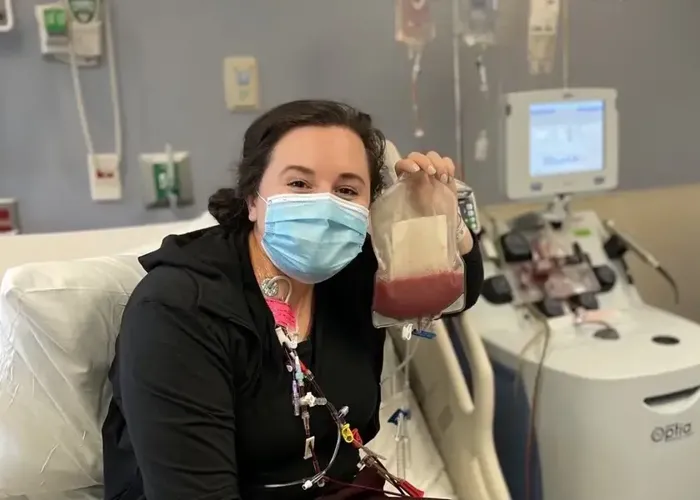
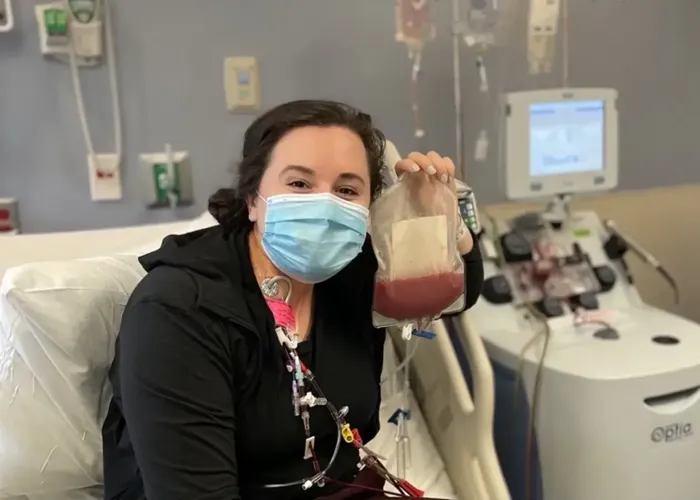
Before she became a St. Luke’s apheresis nurse, she was a donor.
“It’s been cool to have been on both sides of the process,” she said.
Kunzeman became a donor after her friend, Katrina Wuori, suggested she should register for the National Marrow Donor Program.
“You could save somebody’s life!” Wuori said.
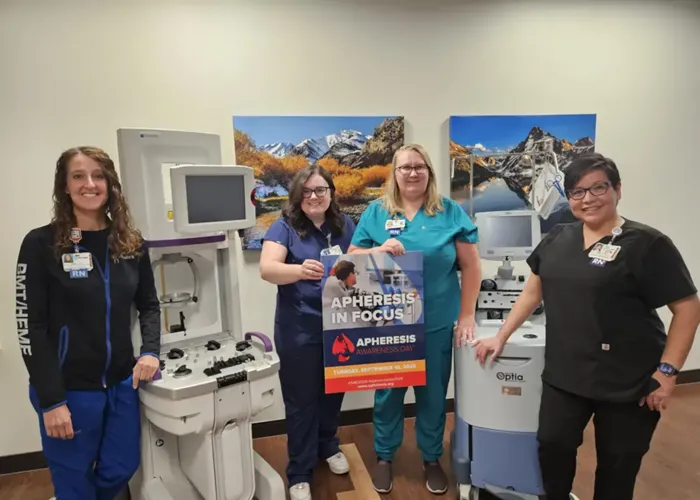
It is pretty clear Wuori is just a bit passionate about the program. Today, she serves as the lead apheresis RN at St. Luke’s.
Kunzeman, who was familiar with the NMDP registry because a family friend had received an allogeneic transplant, decided to join the registry. She assumed that was likely the end of it, but two years after joining the registry, she learned she was a match for someone in need.
People are also reading…
It prompted Kunzeman to learn more about apheresis before deciding to donate. Unlike a traditional blood donation, apheresis allows parts of the blood – such as platelets or plasma – to be separated and collected while the remaining blood components are returned to the donor.
Before donating, Kunzeman went through a short physical, a blood draw and a vein assessment. About five days before the donation procedure, she received some injections in her abdomen that helped her body produce stem cells.
And then in May 2021, she donated.
Was the procedure painful?
“I would say that the procedure itself isn’t typically that painful,” Kunzeman said. “The side effects from the injections can make your bones feel kind of achy.”
Pain medication helped, and she quickly learned in the days following the procedure that if she got off schedule she would feel soreness.
Wuori often tells patients that people will generally tolerate the procedure a whole lot better than they think.
And that was true of Kunzeman’s experience. It is that firsthand knowledge that has served her so well since she joined the St. Luke’s apheresis team in June 2025.
“Margaret has been such a great addition,” Wuori said. “She brings a calm presence to her patient care … and she also brings a really unique perspective. I’ve heard her talk to donors and say, ‘I know what it’s like to get a central line in your neck. I know what it’s like to get the shots and this is what you can expect.’
“She’s just able to talk about her personal experience and that really personalizes it for the donor. It brings the level of care way up, so it’s really cool. She can say, ‘I’ve been there, done that.’ People really appreciate that.”
In turn, Kunzeman has found it gratifying to meet the people who agree to become donors.
“It’s inspiring to meet these people,” she said. “I know I was a donor, but still to meet these people who are willing to sacrifice their time and a little piece of themselves for somebody they don’t even know. … They’re just very giving.”
Those donors – and her colleagues – motivate Kunzeman as she shows up for work each day.
“It’s just very cool to be a part of this team,” she said. “There are just some wonderful people I work with, wonderful doctors and nurses. It’s a very inspiring place to work.”


